

Mental resilience: myth or a cultivable ability?
What resilience really is and how it is cultivated through relationships, experiences and therapy.
Introductory statement
The concept of resilience has been widely used in recent years, but often in a simplistic way. In public discourse it is identified with “strength of character”, with the ability to endure without breaking down. In clinical reality, things are more complex. Resilience is not cruelty, nor a denial of vulnerability. It is the ability of the psyche to maintain coherence under pressure, to process traumatic experiences and to continue investing in life.
As a psychotherapist with a psychodynamic orientation, I understand resilience not as a superficial adaptation, but as a deep internal process related to the formation of the Ego, the regulation of emotion and the quality of early bonds.
Developmental Roots: The Basis of Internal Stability

John Bowlby’s attachment theory laid the foundation for understanding resilience as a developmental phenomenon. When a child experiences a caregiver who is available, predictable, and emotionally regulating, he or she gains the experience that tension can be “held” without being destructive.
Ann Masten described resilience as “ordinary magic,” that is, the result of basic, healthy developmental processes. It does not require exceptional conditions; it requires adequate relationships.
In psychodynamic theory, Donald Winnicott’s concept of a “good enough environment” is directly linked to later resilience capacity. When the environment is adequately adapted to the child's needs, the child gradually internalizes the ability to self-regulate. On the contrary, chronic dysregulation leads to a fragile ego and increased vulnerability to stress.
Neurobiological parameters
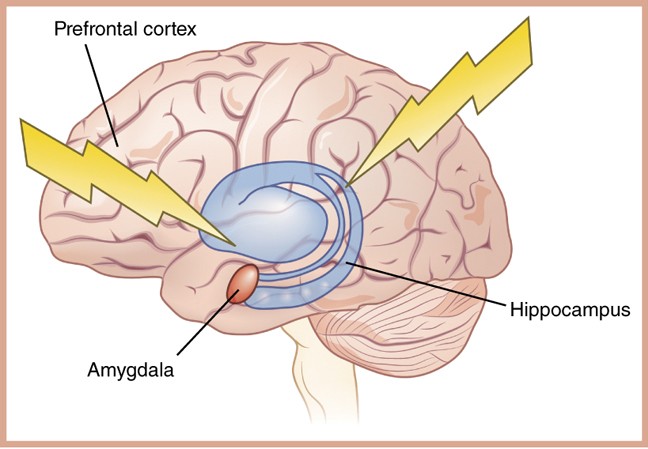
Resilience is not just a psychological concept; it has a neurobiological background. The ability to return from a state of hyperarousal to a state of calm is associated with the functional cooperation of the amygdala and the prefrontal cortex. Chronic childhood hyperarousal can disrupt this cooperation, leading to hypervigilance or disengagement.
However, neuroplasticity allows for modification of these patterns. Stable relationships, psychotherapy, and repeated experiences of emotional safety enhance the regulatory capacity of the nervous system.
The psychodynamic dimension of resilience
In the psychodynamic context, resilience is related to:
tolerance for ambivalence, the capacity to symbolize, the ability to differentiate between fantasy and reality, the stability of identity.
A person with developed resilience can experience anger without destroying the relationship, disappointment without collapsing self-esteem, loss without losing their sense of self.
Examples from everyday life

A mother experiences intense guilt when she feels anger towards her child. Instead of denying it or venting it aggressively, she is able to acknowledge it, think about it, and regulate it. This ability is a form of resilience.
An employee fails a professional goal. Instead of interpreting the event as evidence of inadequacy, he sees it as a learning experience. His self-esteem does not collapse.
A person with a history of trauma chooses to enter therapy. Asking for help, exposing himself emotionally, and enduring the process is an expression of resilience, not weakness.
Pseudo-resilience and collapse
We often encounter people who function excessively well: they work non-stop, take care of everyone, do not express needs. This image of “ability” can be based on defenses of detachment. Pseudo-resilience does not allow for emotional processing. When defenses are exhausted, exhaustion, anxiety or depression appear.
Real resilience requires contact with vulnerability.
Cultivating resilience in adulthood
Resilience is cultivated through:
relationships that allow for authentic expression, making sense of traumatic experiences, developing self-observation, strengthening the ability to tolerate frustration, processing repetitive patterns.
Psychotherapy offers a framework where the individual can experience a new relational experience: expressing intense emotions without being abandoned or rejected. Through this process, a greater inner stability is gradually built.
Simply put
Resilience means I can fall without falling apart. It means I can withstand conflict without destroying the relationship. It means I recognize my fear without completely identifying with it. It means I can ask for help.
To the point
Resilience is not an innate privilege; it is a developmental ability. It is built first in the relationship and then internalized. Neuroplasticity allows it to be strengthened in adulthood. Processing trauma increases mental flexibility. Vulnerability is a component of strength.
Ultimately, mental resilience is not about the absence of cracks, but the ability to live creatively despite their existence. It is a living, dynamic process that is shaped within relationships and transformed through the conscious processing of experience.