

Panic attacks: symptoms, mechanisms and modern therapeutic approaches
Panic attacks may seem threatening, but they are a reversible reaction of the body that, with proper understanding and appropriate therapeutic support, can be effectively treated.
Panic attacks are one of the most common and misunderstood phenomena in modern psychopathology. They are an episode of sudden and intense distress, usually culminating within a few minutes and accompanied by physical and cognitive symptoms, which are often misinterpreted as signs of serious physical illness or imminent death. In the international literature, panic attacks are included in the spectrum of anxiety disorders and constitute the core of panic disorder, but are not limited to it.
What is a panic attack
According to the diagnostic criteria of the DSM-5-TR, a panic attack is defined as a sudden wave of intense fear or distress, which reaches its peak within a few minutes and includes at least four characteristic symptoms. Attacks can occur unexpectedly, without an obvious trigger, or be associated with specific situations.
The modern psychobiological view understands a panic attack as an overactivation of the “fight or flight” system. The autonomic nervous system is activated, catecholamines are released, and the body prepares for immediate action, even when there is no real danger.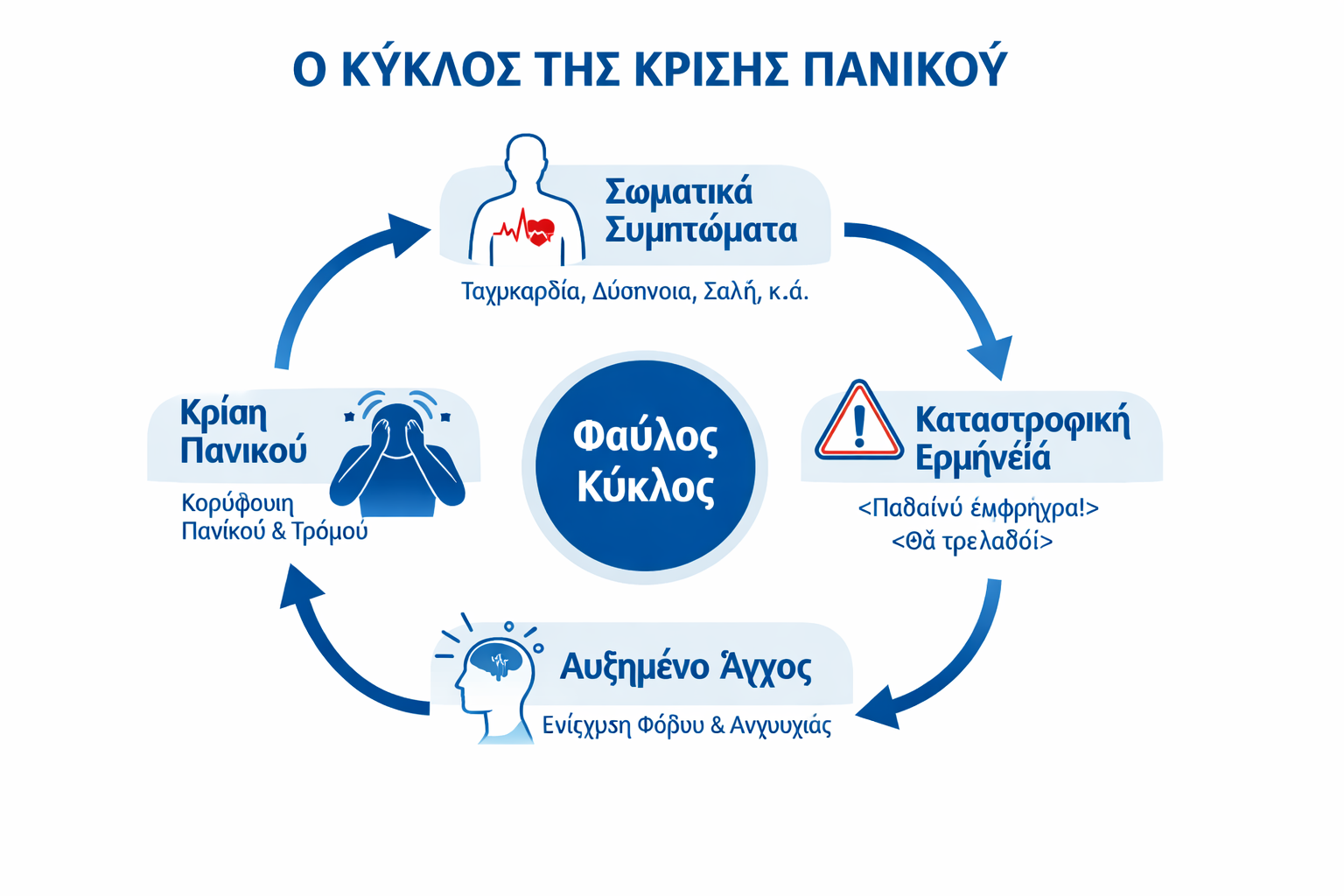
The main symptoms
The symptoms of a panic attack are mainly physical, but are accompanied by an intense mental experience. The most common include:
-
rapid heartbeat or palpitations
-
sweating
-
shaking or trembling
-
feeling short of breath or choking
-
chest pain or discomfort
-
nausea or abdominal discomfort
-
dizziness, unsteadiness, or fainting
-
chills or hot flashes
-
numbness or paresthesias
-
feeling of derealization or depersonalization
-
fear of losing control or going "crazy"
-
fear of imminent death
The experience is usually so intense that many people seek emergency medical help, believing they are having a heart attack.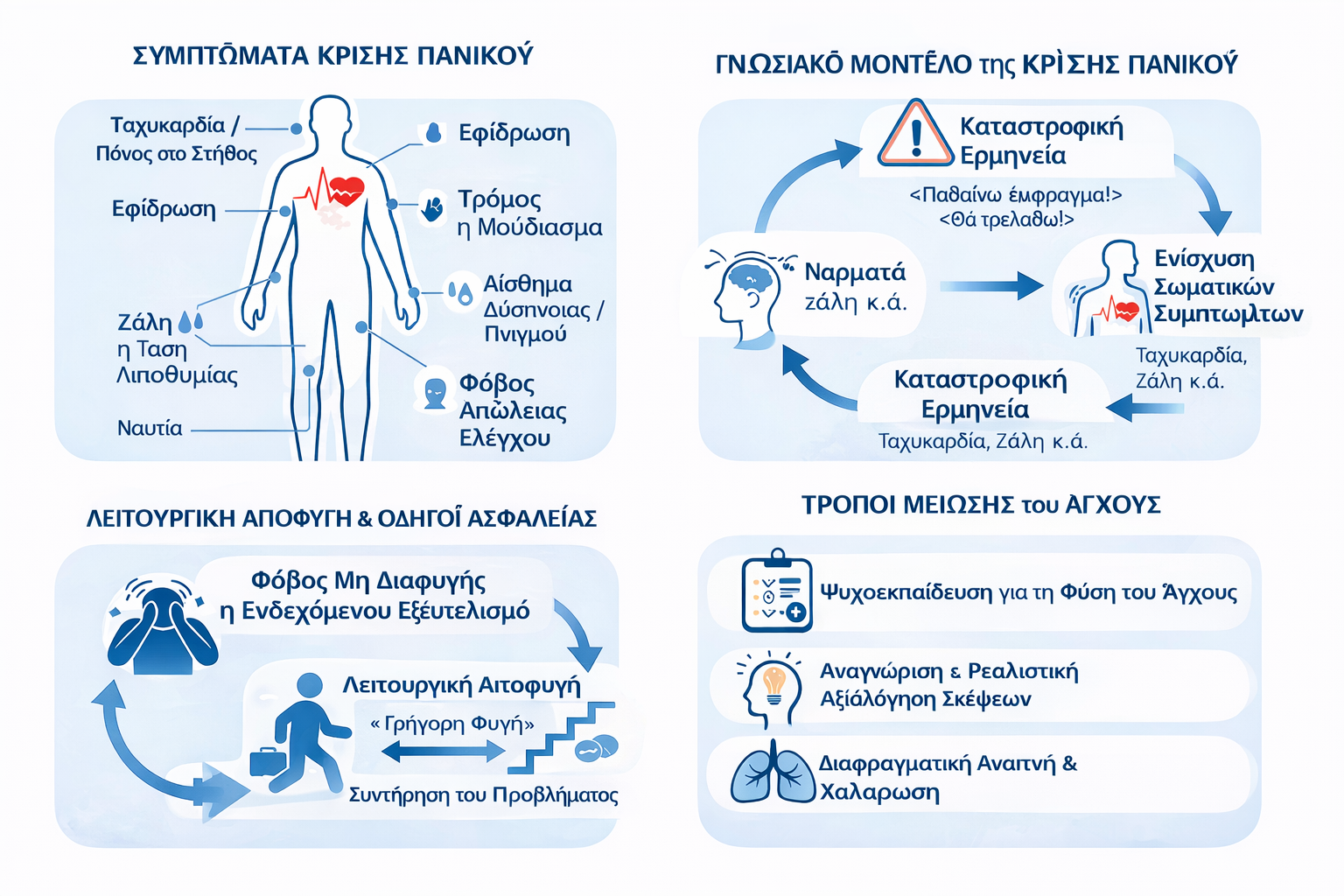
Psychological mechanisms
According to Clark's (1986) cognitive model, panic attacks occur when normal physical sensations are misinterpreted as dangerous. For example, a small increase in heart rate may be interpreted as a sign of a heart attack. This catastrophic interpretation increases anxiety, which in turn increases physical symptoms, creating a vicious cycle.
At the same time, neurobiological research highlights the role of the amygdala, the prefrontal cortex and neurotransmitters, mainly serotonin and noradrenaline, in regulating the fear response. Hypersensitivity of these systems seems to contribute to the occurrence of attacks.
When do we talk about panic disorder
The distinction between isolated attacks and panic disorder is clinically important. Panic disorder is diagnosed when:
-
attacks occur repeatedly and unexpectedly
-
there is a persistent fear of new attacks
-
changes in behavior are observed, such as avoidance or excessive attention to the body
Often, panic disorder is accompanied by agoraphobia, that is, fear of situations where escape is considered difficult or help is unavailable.
Factors contributing to the occurrence
The etiology of panic attacks is considered multifactorial. The literature highlights three main categories:
Biological factors, such as genetic predisposition and neurochemical imbalances.
Psychological factors, such as vulnerability to anxiety, dysfunctional beliefs and a history of traumatic experiences.
Environmental factors, such as chronic stress, major life transitions or losses.
The course and prognosis
Despite the intensity of symptoms, panic attacks are not life-threatening. However, when left untreated, they can lead to significant functional impairment, activity limitation, and secondary problems, such as depression or substance abuse.
Early intervention is associated with a better prognosis and reduced chronicity.
Treatment approaches
Cognitive-behavioral therapy is considered the first-line treatment, with strong evidence of effectiveness from randomized controlled trials and meta-analyses. It includes:
-
psychoeducation about the nature of anxiety
-
recognition and restructuring of destructive thoughts
-
breathing and relaxation techniques
-
graded exposure to physical sensations or phobic situations
Pharmacotherapeutically, the antidepressants selective serotonin reuptake inhibitors (SSRIs) and serotonin-norepinephrine reuptake inhibitors (SNRIs) are the main options, with documented efficacy. Benzodiazepines can be used in the short term, but their long-term use is limited due to the risk of dependence.
Scientific evidence and uncertainties
Strong evidence: Meta-analyses and guidelines support the effectiveness of cognitive-behavioral therapy and SSRIs in panic disorder.
Theoretical models: The cognitive model of catastrophic misinterpretation and neurobiological models of fear are the main explanatory approaches.
Uncertainties: Despite progress, the exact mechanisms that trigger the first attack remain unclear, as well as the reasons why some individuals develop a chronic course while others do not.
Conclusion
A panic attack is an intense but transient experience, associated with dysfunctional activation of anxiety and fear mechanisms. Despite its dramatic image, it is a treatable condition with high rates of improvement, when evidence-based therapeutic approaches are applied. Understanding the symptoms and underlying mechanisms contributes to reducing fear and enhancing the therapeutic perspective.