

Childhood trauma and its silent expressions in adulthood
How childhood trauma is imprinted on the psyche and silently affects relationships, anxiety and identity in adulthood
Introduction
Childhood trauma is not limited to extreme events. It is often a repeated experience of emotional neglect, instability, rejection, or lack of regulatory care. The child does not have the mental maturity to process such experiences; instead of understanding them, he or she incorporates them as internal schemas about the self and the world. Thus, trauma does not remain in the past. It is inscribed in the structure of the personality.
What do we define as childhood trauma?
Contemporary clinical literature distinguishes acute trauma from developmental or relational trauma. The latter involves chronic, recurring deficits in the relationship with the caregiver. It is not necessarily dramatic. But it is corrosive.
Theoretically, the concept of the “good enough mother” introduced by Donald Winnicott describes the importance of a sufficiently stable, regulatory presence. When environmental failure exceeds the child's tolerance, a traumatic record is created.
From the perspective of attachment theory, John Bowlby showed that the security or insecurity of early attachment organizes internal models of relationships. These models are not simple memories; they are ways of being.
The mechanisms by which trauma "survives"
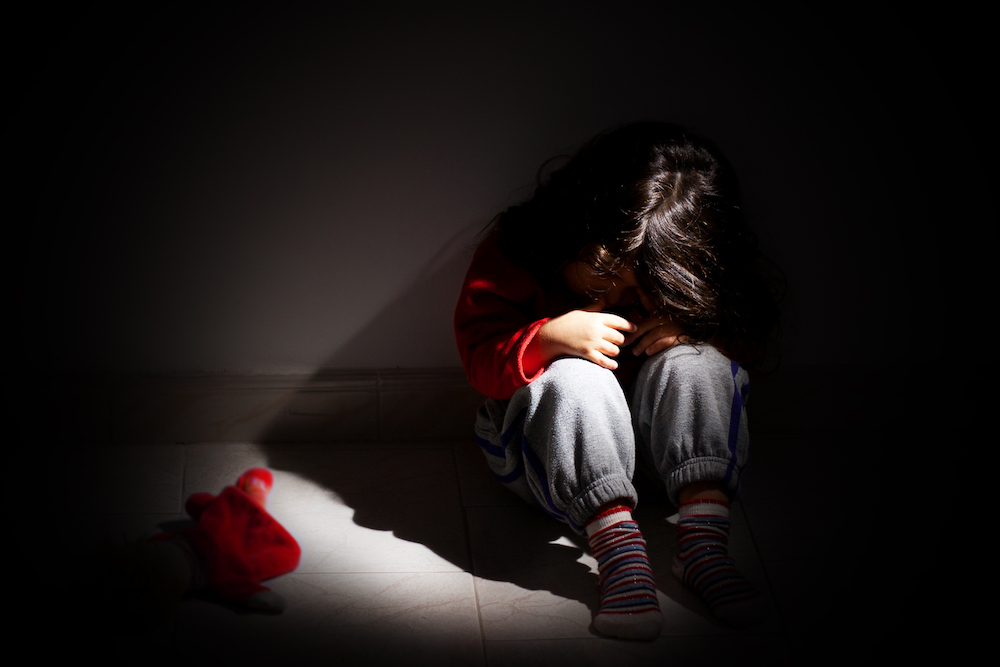
1. Dissociation and psychic separation
When the experience is unbearable, the child cannot symbolize it. The psychic economy chooses dissociation. In adulthood, this manifests as a feeling of emptiness, depersonalization, or difficulty recognizing emotions.
2. Internalized shame
The child tends to attribute responsibility to himself. Chronic rejection translates into a core belief “something is wrong with me.” Shame becomes a central organizer of the personality.
3. Hyperarousal or emotional inhibition
At a neurobiological level, prolonged activation of the stress system affects the regulation of the HPA axis and the function of structures such as the amygdala and the prefrontal cortex. The result can be either chronic hypervigilance or emotional “freezing.”
Silent expressions in adulthood
Childhood trauma is not always expressed as a clear symptom. It often appears indirectly:
Chronic anxiety without an apparent cause. Difficulty in close relationships, with fear of abandonment or absorption. Perfectionism and overachievement as a defense against internal unworthiness. Repetitive patterns of relationships that reproduce the original mental pain. Psychosomatic manifestations without organic etiology.
Repetition is not a conscious choice. It is an unconscious attempt to process an experience that was never completed.
Trauma and identity
The deepest imprint of trauma is not anxiety or depression. It is the formation of a self that is organized around survival instead of authentic desire.
According to modern traumatology, trauma disrupts the sense of coherence of the self. The adult can function socially, professionally, and even successfully, but internally experience disintegration, uncertainty, or permanent insecurity.
The Potential for Transformation
The psychotherapeutic process creates a safe relational space where experience can be acknowledged, named, and integrated. The therapeutic relationship functions as a corrective emotional experience. Retrospective understanding does not change the past; it does change the way it resides in the present.
The goal is not to erase the trauma. It is to reinterpret and integrate it into a more coherent narrative of self.
In conclusion
Childhood trauma is not simply an event that happened. It is a way in which the psyche has learned to organize itself in order to survive. Its silent expressions in adulthood are not a weakness, but an indication of an early adaptation.
Understanding this path is the first step towards a freer and more authentic existence.