
Burnout: when it isn't the work that runs out, but the self we built for it
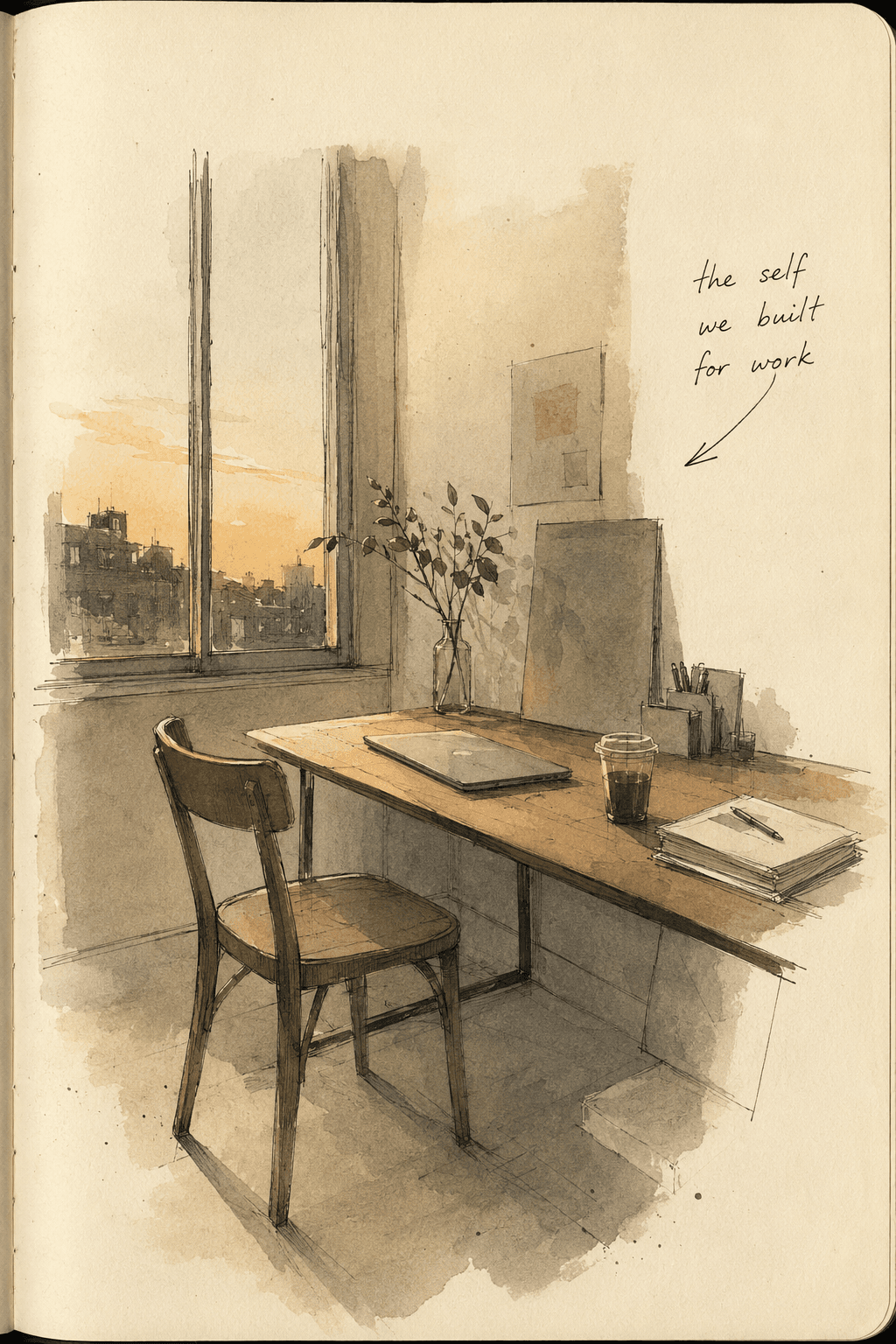
Burnout is not simply exhaustion from overwork. It is the moment when the self we built on performance can no longer hold us up. How burnout develops and how therapy approaches it.
Public conversation about burnout almost always speaks in numbers: how many hours, how much workload, how much output. The solutions it offers are numerical too. Fewer hours, better organisation, a time-management tool, maybe a meditation app. And yet, in clinical practice, the people who collapse are rarely the ones who objectively work the most hours. They are the ones who cannot stop.
This distinction isn't a detail. It changes the entire way we understand the problem. Because if the issue were workload, rest would be the cure. We know it isn't: plenty of people come back from long holidays just as empty, or feel guilty for resting, or fill their leave with other forms of productivity. Something deeper than tiredness is at play here.
As a psychotherapist, I rarely meet burnout that is only about work. Almost always, behind the exhaustion, there is a question the person has never dared to ask: who will I be, if I stop performing?
Research shows how widespread the issue is in Greece. A 2025 study by EY Greece, Hellas EAP and the Experimental Psychology Lab of the University of Athens, surveying more than four thousand employees, found that over half reported experiencing burnout. The figure is striking, but on its own it explains nothing. To understand what is really happening, we need to go behind the symptom.
From Freudenberger to Maslach: what it is, and what it isn't
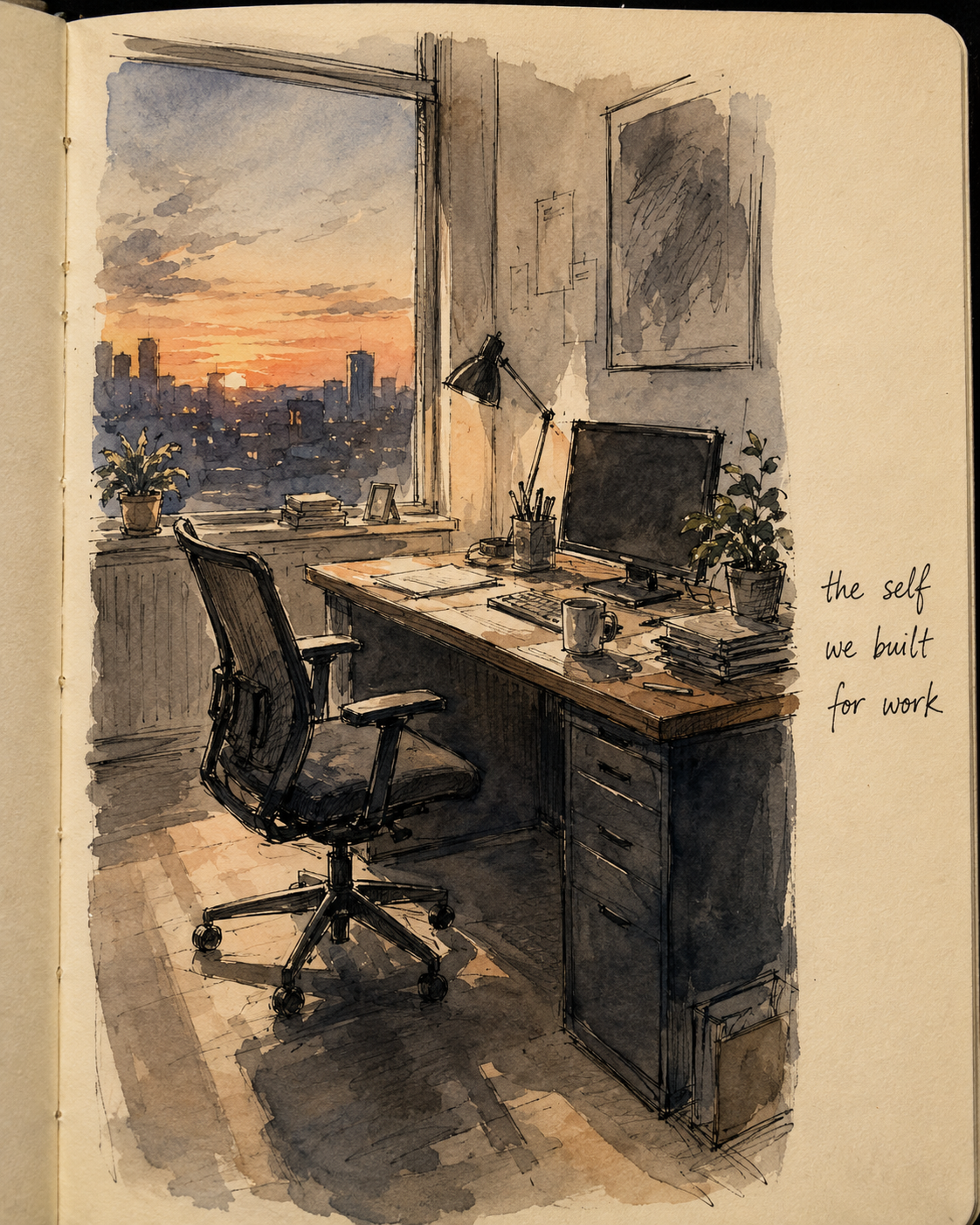
The word "burnout" wasn't born in a management office. It was introduced in 1974 by the psychoanalyst Herbert Freudenberger, who noticed something that unsettled him: the volunteers at free clinics in New York, the most idealistic and devoted of them all, were the first to collapse. It wasn't the indifferent ones. It was those who gave everything. Freudenberger, himself one of the most work-driven people in his circle, recognised in the phenomenon something that concerned him personally.
A few years later, the social psychologist Christina Maslach gave the phenomenon its scientific structure. She described three dimensions: emotional exhaustion, the sense that one's psychic reserves have run dry; depersonalisation or cynicism, a distancing from the work and the people in it that operates as a defence; and a reduced sense of personal accomplishment, the experience that nothing one does carries value or meaning anymore.
What we take from Maslach is that burnout isn't simply "a lot of tiredness". Tiredness passes with sleep. The exhaustion of burnout doesn't pass, because it isn't only about the body. It concerns a relationship with work that has been quietly eroded, until there is nothing left to give.
Here caution is needed. Public discourse loves clean distinctions: burnout is occupational, depression is psychiatric, full stop. Clinical reality is blurrier. The border between burnout and depression is far more permeable than it suits us to admit, and we will return to this. For now, it's enough to say that burnout is real, recognisable, and at the same time something that resists a clean category.
The false self at work
To understand why some people burn out while others, in the same job, with the same workload, do not, we need to talk about something that precedes work by decades.
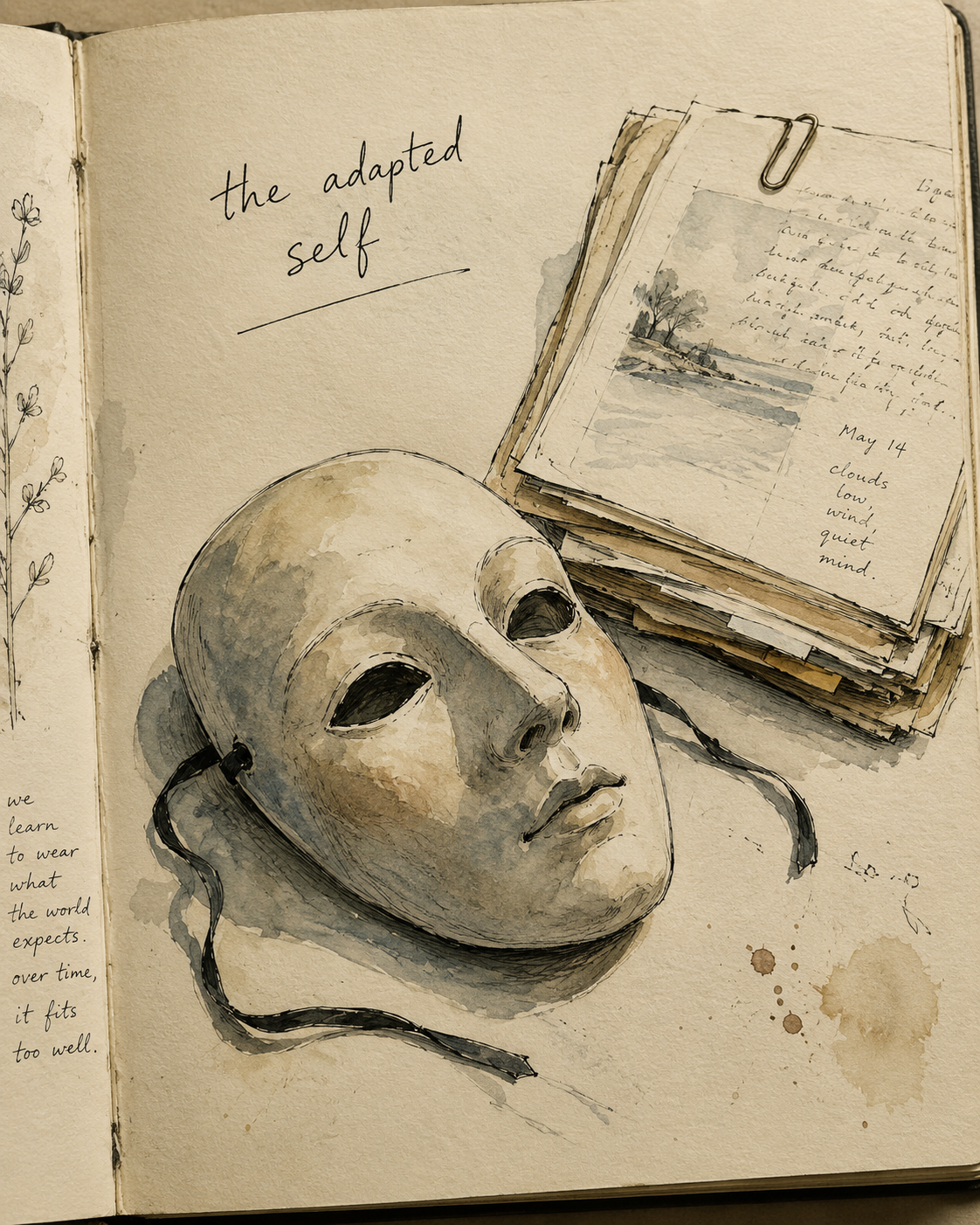
Donald Winnicott described a structure he called the "false self". It is an early survival solution. When the caregiving environment cannot respond to the infant's spontaneous needs, when a parent's love is available on conditions, the child learns a deep, wordless truth: to be loved, I must be what they need. It develops, then, an adapted surface, a self that responds, that reads other people's expectations and satisfies them, while the authentic, spontaneous core withdraws and takes shelter somewhere deep.
The false self isn't pathology in itself. We all have a social surface. The problem appears when adaptation becomes the only way to exist, when the sense of one's worth hangs entirely on meeting expectations. And this is where adult working life fits like a glove.
Because work is, perhaps, the only arena in adult life where over-adaptation is systematically rewarded. The child who learned not to be a burden, to anticipate others' needs, to perform in order to deserve, finds in the workplace a setting where exactly these qualities are praised, promoted, rewarded. The person becomes "indispensable". And for a false self, being indispensable feels, for a while, like being loved.
Burnout is the moment this machine runs out of fuel. The false self operates at a cost that doesn't show, because it requires the constant suppression of the authentic one. At some point, the reserves run out. And because the person has identified so completely with their performance, the collapse isn't experienced as "I'm tired" but as "I'm falling apart". It's no accident that burnout strikes the most capable, the most reliable, those who "had it all under control" most often. The collapse that looks inexplicable is, in fact, entirely logical: what collapsed was a self made only to perform, never to endure. This experience of inner disintegration is close to what is described in the article on the fear of breakdown: the fear of inner dissolution doesn't always concern the future, but an experience that has already happened and is waiting, at last, to find room.
The psychodynamics of work: what the job asks of the psyche
Work is not psychically neutral. It isn't merely an exchange of time for money. The French psychiatrist and psychoanalyst Christophe Dejours, founder of the "psychodynamics of work", showed that something far deeper is at stake in the workplace: recognition.
A person gives work not only their knowledge and their time. They give an effort that always exceeds what the official job description anticipates. They cover the gaps, solve the unforeseen, put in something of themselves that no organisational chart records. In return, they need something that, for Dejours, is fundamental to psychic balance: recognition of that effort. Not necessarily money. Recognition. The gaze that says "I saw what you did, and it counted".
When that recognition is systematically absent, when the organisation keeps asking for more and returning less, a silent psychic contract breaks. The person keeps giving, because the false self doesn't know how to do otherwise, while inside them the very desire begins to die. The offering itself, which once gave meaning, now becomes a source of bitterness and emptiness.
The Greek working landscape makes this dynamic particularly acute. In the same 2025 study, while more than half of employees reported burnout, only one in five believed their organisation genuinely cared about their mental health. The gap between what the employee gives and what they feel is recognised is, in Dejours' terms, precisely the ground where burnout grows. This isn't individual weakness. It's a relationship that has become one-sided.
What happens in the body
The exhaustion of burnout is not a metaphor. It has a biological imprint, and to understand it we have to talk about the hypothalamic-pituitary-adrenal axis, the system that regulates the body's response to stress.
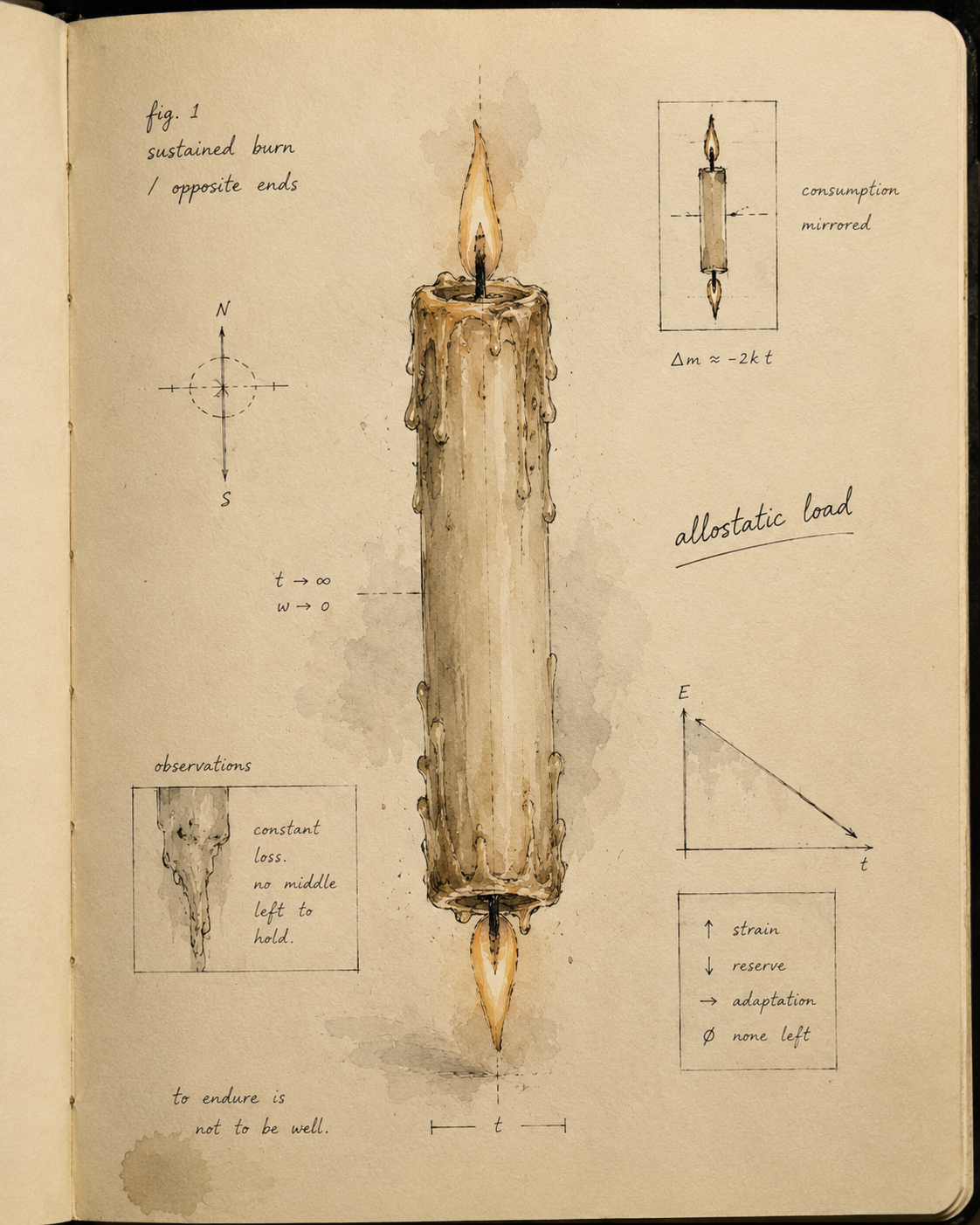
Under normal conditions, this system activates in the face of a threat and then returns to calm. The body mobilises, copes, and afterwards recovers. The problem with chronic work pressure is that the recovery phase never comes. The system stays permanently switched on. The neuroscientist Bruce McEwen called this wear "allostatic load": the price the body pays when the mechanisms of stress adaptation never shut off. Cortisol, the hormone that protects us in an acute threat, when it stays permanently elevated begins to corrode: it affects sleep, memory, immunity, mood.
There is a subtler dimension here too, one that links the neurobiology to the psychodynamics. Allan Schore showed that our capacity to regulate our emotions is not innate; it is built early, within the relationship with the caregiver who soothes us when we are overwhelmed. Those who did not have enough of that experience learn to regulate themselves in other ways. And one of the most common is activity, the task, performance. I work, therefore I don't feel. For some people, relentless work is not ambition; it is the only way they know to keep an inner chaos at a distance. When the system runs out, it isn't only productivity that collapses. What also collapses is the only mechanism of self-regulation the person had, and then everything the work was holding at bay comes pouring out.
We must, however, be careful. Burnout does not, to this day, have a clean biological marker, a blood test that confirms it. The research is heterogeneous and often contradictory. What we are describing is a reliable pattern, not an absolute certainty. Psychic reality, as always, escapes clean mechanisms.
The psychodynamics of work: what the job asks of the psyche
Work is not psychically neutral. It isn't merely an exchange of time for money. The French psychiatrist and psychoanalyst Christophe Dejours, founder of the "psychodynamics of work", showed that something far deeper is at stake in the workplace: recognition.
A person gives work not only their knowledge and their time. They give an effort that always exceeds what the official job description anticipates. They cover the gaps, solve the unforeseen, put in something of themselves that no organisational chart records. In return, they need something that, for Dejours, is fundamental to psychic balance: recognition of that effort. Not necessarily money. Recognition. The gaze that says "I saw what you did, and it counted".
When that recognition is systematically absent, when the organisation keeps asking for more and returning less, a silent psychic contract breaks. The person keeps giving, because the false self doesn't know how to do otherwise, while inside them the very desire begins to die. The offering itself, which once gave meaning, now becomes a source of bitterness and emptiness.
The Greek working landscape makes this dynamic particularly acute. In the same 2025 study, while more than half of employees reported burnout, only one in five believed their organisation genuinely cared about their mental health. The gap between what the employee gives and what they feel is recognised is, in Dejours' terms, precisely the ground where burnout grows. This isn't individual weakness. It's a relationship that has become one-sided.
What happens in the body
The exhaustion of burnout is not a metaphor. It has a biological imprint, and to understand it we have to talk about the hypothalamic-pituitary-adrenal axis, the system that regulates the body's response to stress.
Under normal conditions, this system activates in the face of a threat and then returns to calm. The body mobilises, copes, and afterwards recovers. The problem with chronic work pressure is that the recovery phase never comes. The system stays permanently switched on. The neuroscientist Bruce McEwen called this wear "allostatic load": the price the body pays when the mechanisms of stress adaptation never shut off. Cortisol, the hormone that protects us in an acute threat, when it stays permanently elevated begins to corrode: it affects sleep, memory, immunity, mood.
There is a subtler dimension here too, one that links the neurobiology to the psychodynamics. Allan Schore showed that our capacity to regulate our emotions is not innate; it is built early, within the relationship with the caregiver who soothes us when we are overwhelmed. Those who did not have enough of that experience learn to regulate themselves in other ways. And one of the most common is activity, the task, performance. I work, therefore I don't feel. For some people, relentless work is not ambition; it is the only way they know to keep an inner chaos at a distance. When the system runs out, it isn't only productivity that collapses. What also collapses is the only mechanism of self-regulation the person had, and then everything the work was holding at bay comes pouring out.
We must, however, be careful. Burnout does not, to this day, have a clean biological marker, a blood test that confirms it. The research is heterogeneous and often contradictory. What we are describing is a reliable pattern, not an absolute certainty. Psychic reality, as always, escapes clean mechanisms.
The "functional" person, just before
Burnout rarely looks, from the outside, like collapse. Long before anything shows, the person is still functioning impeccably. They answer messages, meet deadlines, support others. No one suspects a thing, often not even themselves.
It's the person who opens their email on Sunday night "to take the edge off Monday", and doesn't notice that Sunday has stopped existing. It's the one who feels a gradual deadening of interest in things that once moved them, and reads it as laziness or ingratitude, adding one more charge against themselves. It's the one who turns cynical, who mocks the work and the people in it, without realising that cynicism is a defence, a way of disconnecting from something that hurts.
And then, often, comes the moment when the body decides what the psyche refused to admit. A headache that won't lift, a racing heart, an unexplained fatigue, a stomach that tightens every morning. The body says "no" where the person insisted on saying "yes". As explored in the article on the psychosomatic symptom, the body often speaks precisely for what the psyche found no way to say. In burnout, the physical symptom is frequently the first honest message after months or years of silence.
Burnout or depression?
The distinction understandably preoccupies those who live it. In theory, the line is clear: burnout is context-specific, tied to work, whereas depression diffuses through every part of life. The person with burnout may, at least at first, feel relief when they step away from the work environment; the person with depression carries the weight everywhere, even on holiday, even in the things they love.
In practice, though, the two get tangled. Prolonged burnout often unlocks a depression, especially when the person has invested their entire worth in work and the collapse there shakes the whole sense of self. And conversely, an underlying depression can disguise itself as burnout, because it's socially more acceptable to say "I burned out at work" than "I can't stand my life anymore". The distinction, in depth, needs a personal assessment by a professional, not a symptom checklist online. When sadness, anhedonia and loss of meaning persist beyond work too, as described in the article on depression, seeking help stops being a choice and becomes a necessity.
The therapeutic approach: not time management
The reason most "tips" for burnout fail is simple, and a little harsh: they address the false self. "Get better organised", "set boundaries", "take care of yourself" are immediately translated, inside the exhausted person's mind, into one more programme to execute, one more performance to nail perfectly. The person who learned to be worthy through performance will try to do their recovery productively too. And they will fail, because the mechanism that brought them here cannot take them out of here.
Psychodynamic work begins elsewhere. It doesn't ask "how will you work smarter", but "who does this relentless performing serve". Whose gaze are you still chasing, all these years later? Whose recognition are you waiting for, that perhaps never came and will not come from where you're looking for it? Behind the tireless worker there is often a child who understood, very early, that to be loved they had to be useful. Therapy offers, perhaps for the first time, a space where the person is received without having to prove anything.
There is a grief in this process, too, that no one usually names. Recovering from burnout means, to a degree, saying goodbye to an identity. The person who was always available, always capable, always the rock for others. That identity, however costly, gave a sense of worth. Letting it go feels, at first, like a loss. It takes time to discover that underneath there was always another self, more alive and more real, waiting patiently to finally be given a voice.
I owe it, finally, to say something that isn't said often in therapeutic writing: sometimes inner work isn't enough. There are workplaces that are toxic, exploitative, structurally impossible to change. In these cases, the healthier act is to leave, not to endure better. Psychotherapy doesn't exist to make you more resilient to conditions that are making you ill. It exists to help you tell apart what you can change within yourself from what you must change around you.
In plainer words
Burnout has nothing to do with a weak character or a lack of stamina; it is the exhaustion of a self built to perform, not to live.
It isn't those who work the most who collapse, but those who cannot stop, because somewhere they learned they are only worth something when they're useful.
Rest alone doesn't cure it, because the problem isn't the workload but our relationship with our own worth.
Work needs recognition, not just pay; when that is chronically missing, something in us quietly goes out.
And sometimes, the most therapeutic decision is to leave the place that is making you ill, however much you were taught that leaving is defeat.
A different ending
Burnout almost always arrives as a catastrophe, and it is one. But for many people it is also something else: the first time the self, the real one, forces the person to listen. The false self does not surrender to reason. It surrenders only when it runs out. And within that exhaustion, paradoxically, a possibility opens.
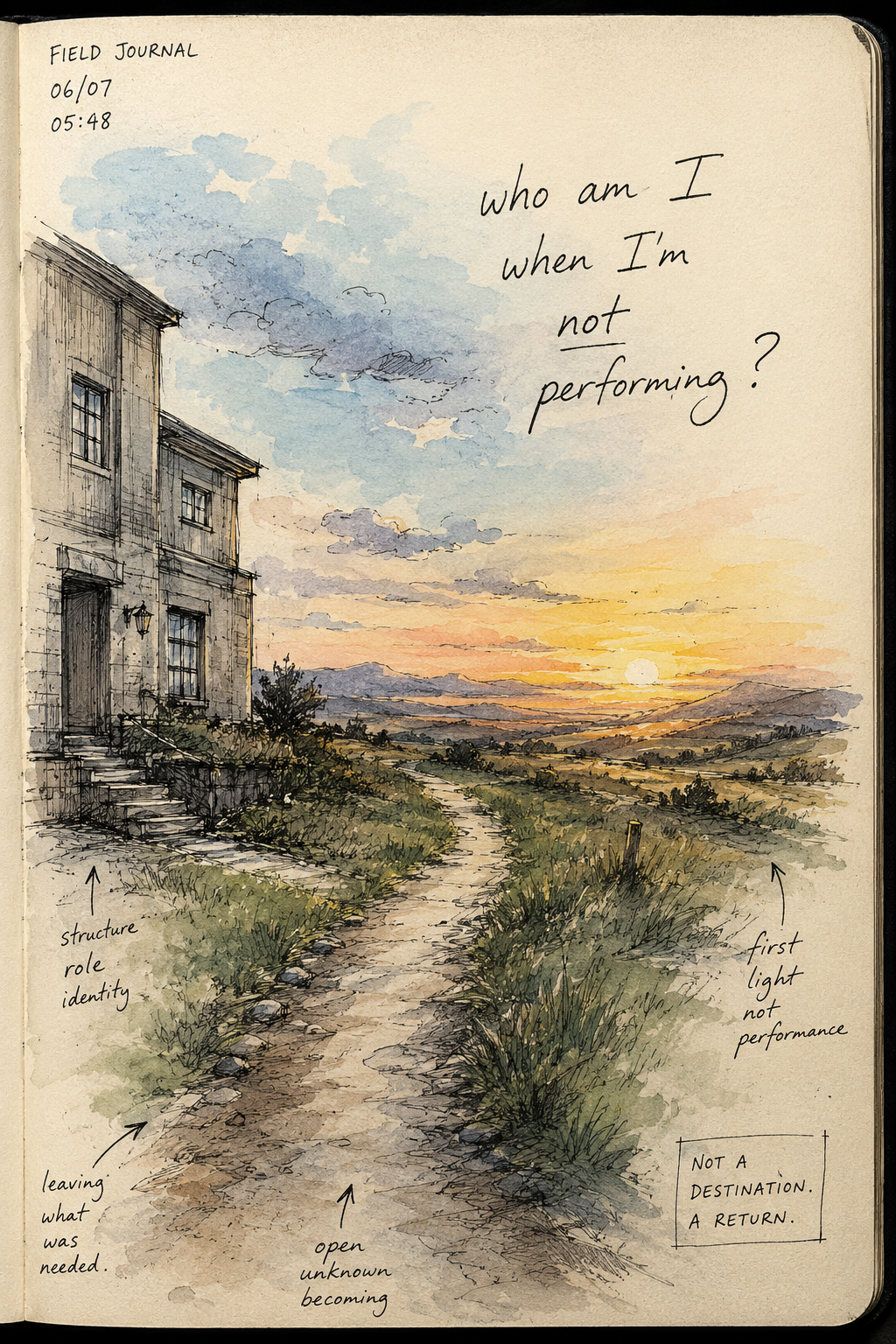
The question burnout imposes isn't "how do I become productive again". It is, far more deeply, "who am I when I'm not performing". It is a terrifying question for anyone who built their whole life on performance. But it is also the beginning of a truer relationship with oneself, a relationship that doesn't rest on what one produces, but on what one is. And that relationship, unlike the previous one, does not run out.
Theoretical sources
For anyone who would like to read further, the main sources this piece draws on, alphabetically:
Christophe Dejours, Travail: usure mentale and his wider work on the psychodynamics of work, on the central role of recognition in our psychic relationship to work.
Herbert Freudenberger, "Staff Burn-Out" (1974), the paper that introduced the term, observing the collapse of the most devoted.
Christina Maslach, The Maslach Burnout Inventory and Burnout: The Cost of Caring, on the three dimensions of occupational burnout.
Bruce McEwen, his work on allostatic load and the toll of chronic stress on the body.
Allan Schore, Affect Regulation and the Origin of the Self (1994), on the development of self-regulation within the early relationship.
Donald Winnicott, "Ego Distortion in Terms of True and False Self" (1960), on the distinction between the authentic and the adapted self.
The Greek data is drawn from the survey by EY Greece, Hellas EAP and the Experimental Psychology Lab of the University of Athens on employee mental health (2025).