
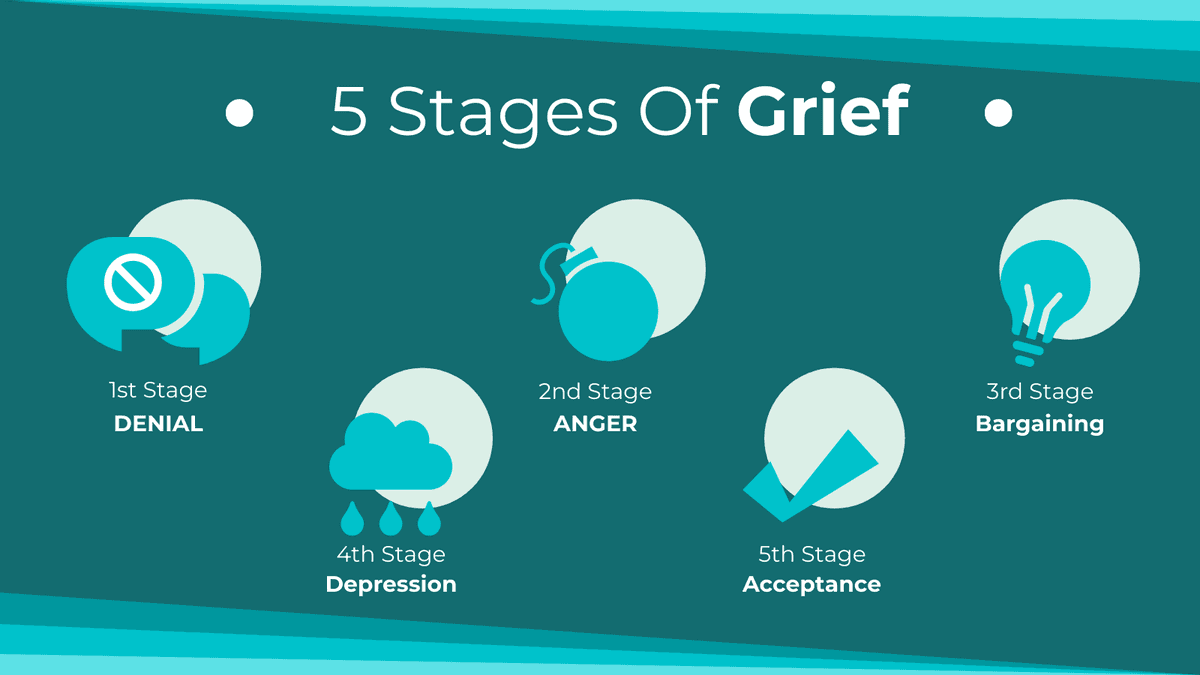
The stages of grief: psychological understanding and therapeutic approach
Grief has no right or wrong path; it is an internal process of adjustment that requires time, understanding, and support.
Mourning is a natural and inevitable psychological process that follows the loss of a significant person, role, or life situation. In modern psychological and psychoanalytic theory, mourning is not considered simply an emotional reaction, but a dynamic process of adaptation, through which the individual is called upon to reorganize his or her inner and outer world.
Although the experience of mourning is deeply personal and does not necessarily follow a linear course, scientific literature has proposed certain models for understanding its stages or phases.
The Kübler-Ross Stages Model
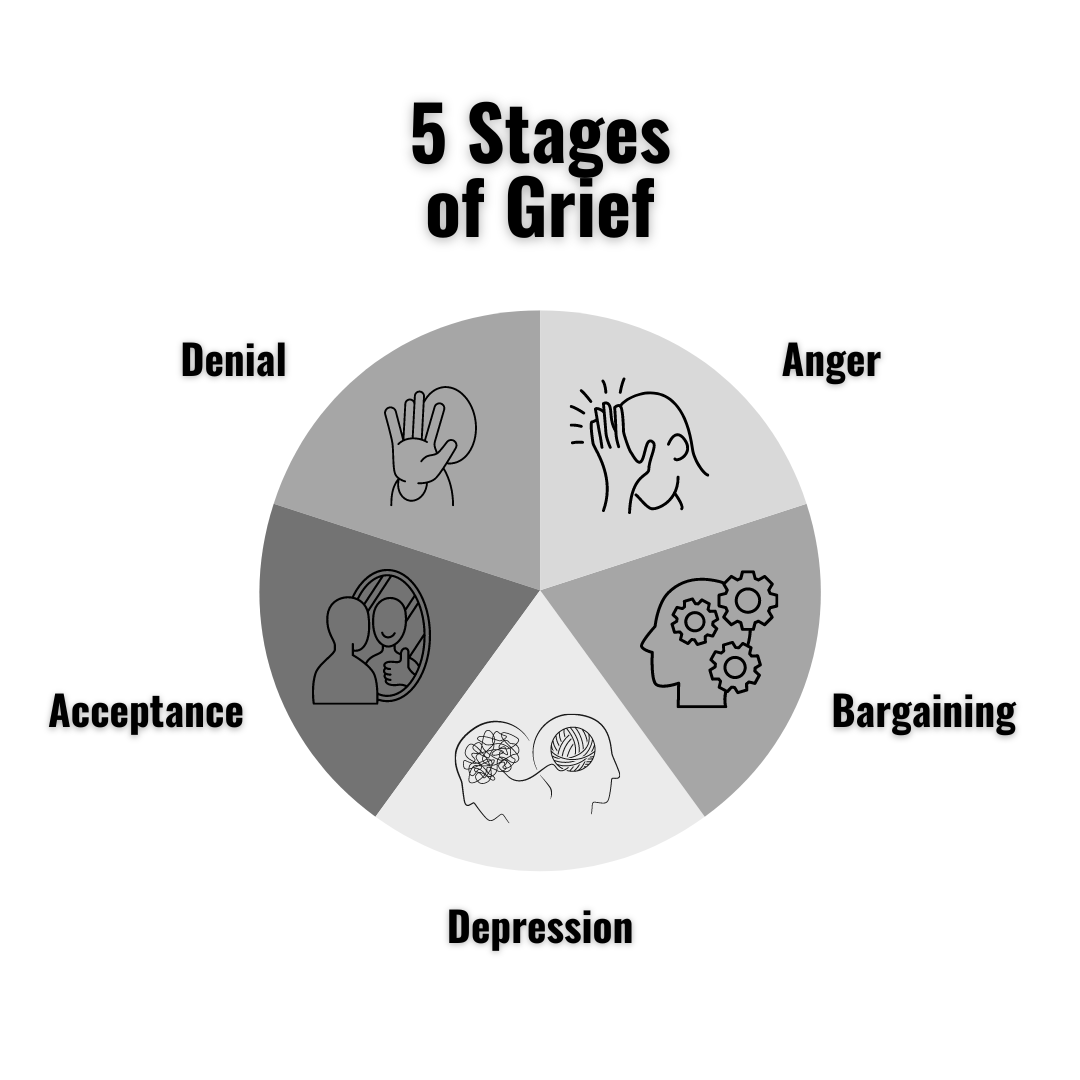
The best-known model is that of Elisabeth Kübler-Ross (1969), which originally described the stages experienced by terminally ill patients, but was later expanded to describe the grieving process. The model includes five basic stages:
1. Denial
Denial functions as an initial defense mechanism. The person has difficulty accepting the reality of the loss and may feel emotionally disconnected or numb. Denial is not a pathological reaction; on the contrary, it protects the psyche from a sudden emotional collapse.
2. Anger
As the reality of the loss begins to dawn, intense anger may arise. This emotion may be directed at oneself, others, doctors, or even the person who was lost. Anger is often an expression of deep grief and a sense of injustice.
3. Bargaining
In this stage, the person may mentally try to “undo” the loss. Thoughts of “if only I had done something differently” or fantasies that the loss could have been avoided appear. Bargaining is related to the need to maintain a sense of control.
4. Depression
When the reality of the loss is fully realized, deep sadness, despair, and withdrawal appear. The person may experience a lack of interest, fatigue, and sleep or appetite disturbances. This phase is a natural part of grief and is not necessarily synonymous with clinical depression.
5. Acceptance
In the acceptance stage, the individual does not cease to feel sadness, but begins to adapt to the new reality. The loss is gradually integrated into the personal story and it becomes possible to invest in new relationships, activities and meanings of life.
Modern theoretical approaches
Although the stage model is widely known, the modern scientific community emphasizes that grief does not necessarily evolve in a linear or universal way.
The dual-process model (Stroebe & Schut)
According to this model, the individual moves between two types of processes:
-
loss-oriented processes (grief, memory, pain)
-
recovery-oriented processes (new roles, practical changes, readjustment)
The oscillation between these two states is considered normal and adaptive.
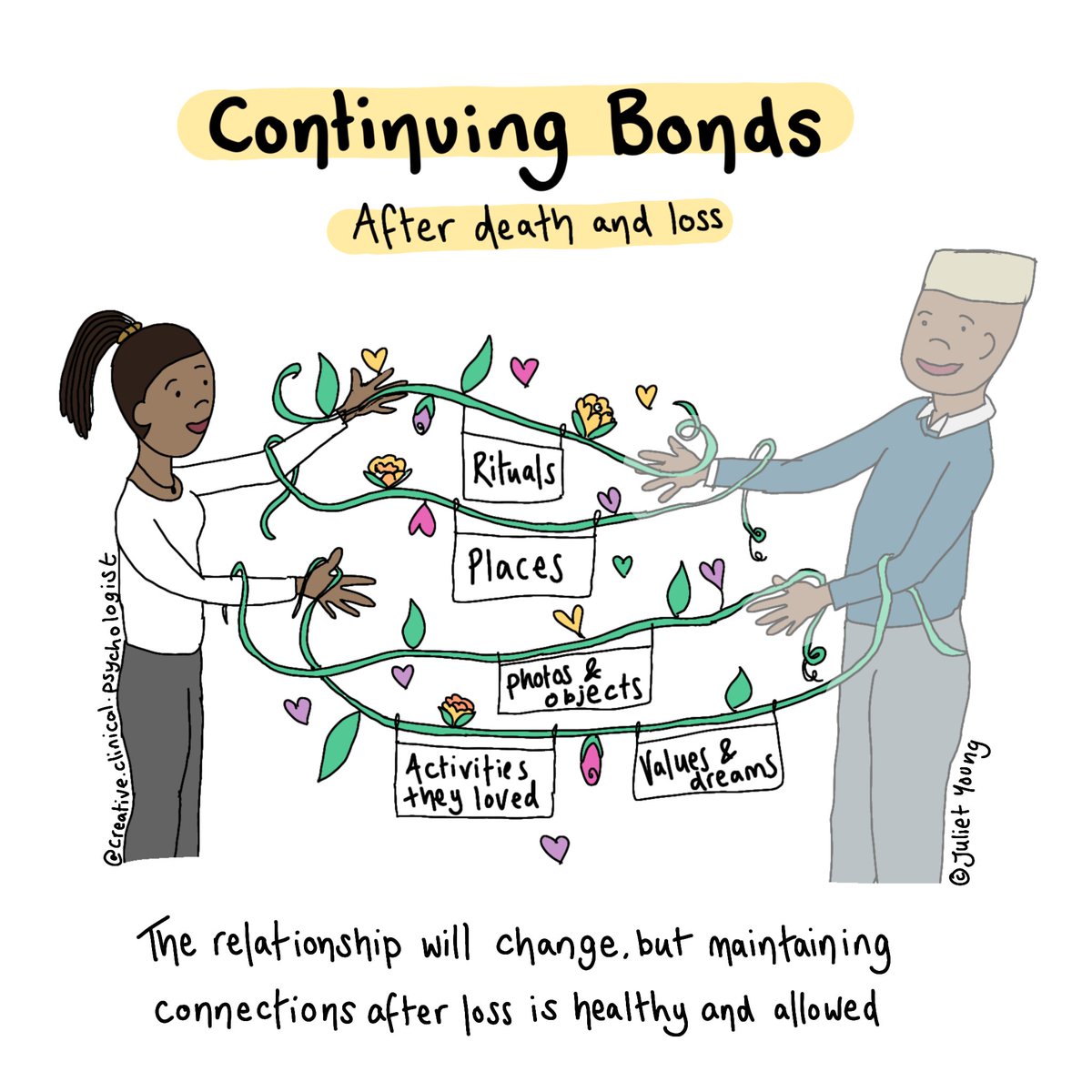
The theory of continuing bonds
Modern approaches argue that healthy adaptation does not require "cutting off" from the person who was lost, but rather the transformation of the relationship with him. The bond continues to exist on an internal level, through memories, values, and symbolic connections.
When does grief become complicated
In most cases, grief progresses naturally and gradually. However, some people may develop prolonged or complicated grief, which is characterized by:
-
persistent and intense longing for the person who was lost
-
difficulty accepting the loss
-
a sense of emptiness or lack of meaning for a long period of time
-
significant impairment in functioning
In these cases, specialized psychotherapeutic intervention is important.
Therapeutic approach to grief
Therapeutic work on grief does not aim to “eliminate” grief, but to create a mental space where the person can:
-
process the loss
-
express their feelings safely
-
reconstruct their personal identity
-
reinvest in life
Psychotherapy, whether individual or group, has proven effective mainly in cases of complicated grief, while for normal grief, a supportive social environment plays an important role.
Scientific evidence and uncertainties
Strong evidence: Studies support the dual-process model and the importance of ongoing bonds as adaptive mechanisms in grief.
Theoretical models: The Kübler-Ross stage model remains useful as a descriptive framework, but it is not considered universal or linear.
Uncertainties: There is no single pattern of grief that applies to everyone. Cultural factors, personality, the nature of the relationship and the circumstances of the loss significantly influence its course.
Conclusion
Grief is a deeply human process, through which the individual is called upon to redefine his relationship with loss and life. The stages of grief are not rigid steps, but indicative mental stations. With the appropriate support, this process can lead to mental maturation, reconstruction and a deeper understanding of the self.