

The Difference Between "I Did Something Bad" and "I Am Something Bad"
Shame differs radically from guilt: it isn't about the act but about the self. How it forms in childhood, why it drives hiding, and how it is worked with therapeutically.
Shame: The Difference Between "I Did Something Bad" and "I Am Something Bad"
You're driving, or queuing at a till, or about to fall asleep, and it arrives. A scene from ten years ago: something you said in a group that landed in silence, a moment you were humiliated in front of people, a time you were corrected publicly. Nobody remembers it now. In all likelihood nobody noticed it then either, apart from you. And yet the body reacts right now: heat rises in your face, your shoulders draw in, something inside contracts as if trying to become smaller.
Few emotions have this physical immediacy and this persistence over time. An old sadness gets remembered as information. An old shame gets relived. The difference isn't accidental, and it comes down to what shame actually is and what it addresses: it concerns what we fear we are, never what we did.
The distinction that changes everything
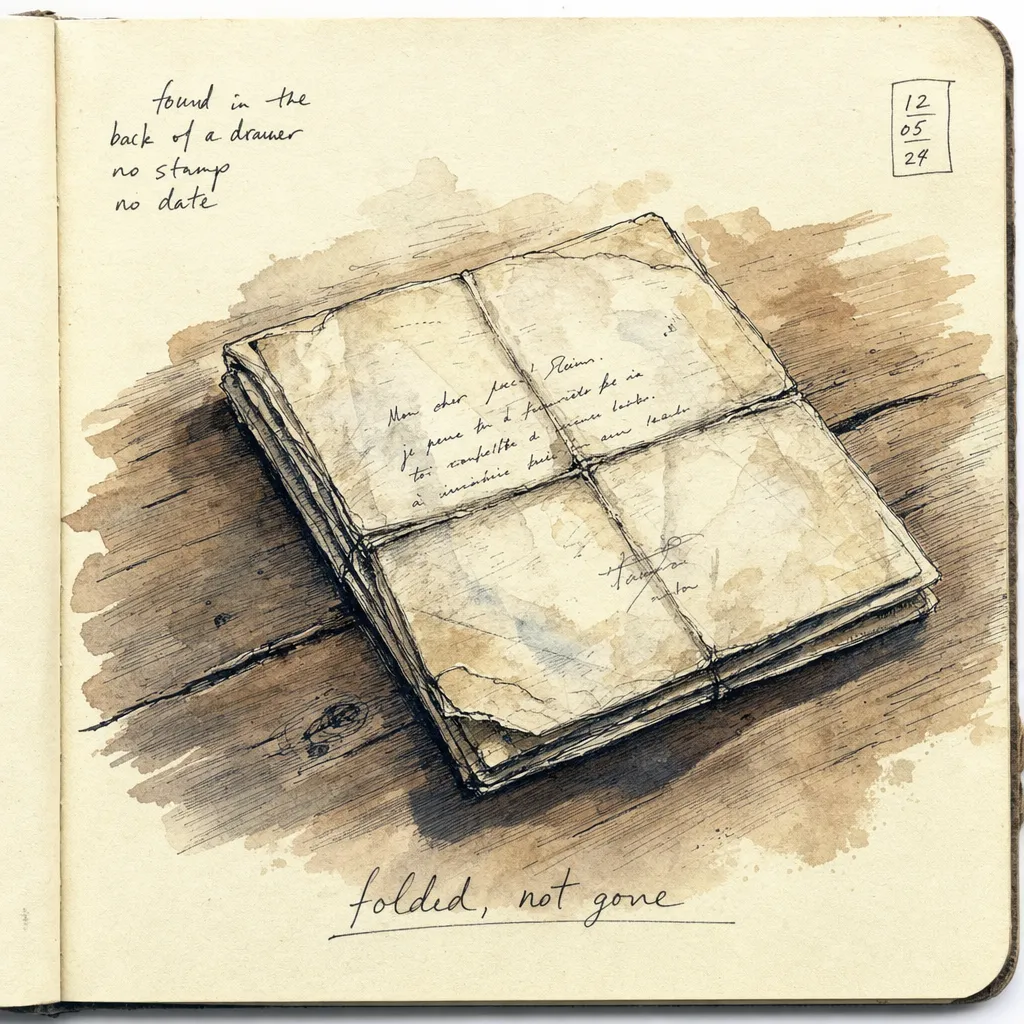
Guilt says "I did something bad". Shame says "I am something bad". The first concerns an action and therefore has an exit: I can apologise, make amends, do it differently next time. The second concerns the self, and there no reparation is possible, because nobody can apologise for existing.
This distinction was set out systematically in 1971 by the psychoanalyst Helen Block Lewis, and it remains among the most useful clinical psychology has produced. Lewis observed that the two emotions drive completely opposite behaviours. Guilt mobilises outwards: it turns me towards the other person, makes me want to repair the damage, to come closer. Shame mobilises inwards and backwards: it makes me want to disappear, to avoid the gaze, to be unseen.
In everyday speech the two words are used almost interchangeably, and this creates confusion with practical consequences. Someone who says "I feel guilty" while actually feeling shame will look for a solution where none exists: they'll try to make amends, they'll apologise repeatedly, and they'll wonder why the feeling doesn't lift. It doesn't lift because the apology answers the wrong question.
Why it exists at all
You'd expect such a painful emotion to be a malfunction by definition. The evolutionary picture says otherwise, and it's worth holding in mind before going further.
The psychologist Silvan Tomkins described shame as a primary affect with a specific, universal physical signature: the gaze drops, the head tilts, the body shrinks, blood rises to the face. This signature appears very early, before a child has language or moral concepts, which points to a built-in mechanism rather than learnt behaviour.
The mechanism has a function. For a social species, expulsion from the group was equivalent to death. So a fast, unpleasant internal signal was needed, one that warned when something threatened our standing in the group, so we could correct course. Shame is exactly that signal, and the intensity of its discomfort matches the size of the danger it once flagged.
The problem, then, lies in its conversion from a passing signal into a permanent identity, not in its existence. Healthy shame comes, does its job, and leaves: I blush, I move past it, I carry on. Toxic shame never leaves, because it has stopped referring to behaviour and become the answer to the question "who am I".
How it becomes identity
That conversion has a developmental history, and its critical moment sits earlier than most people imagine.
Allan Schore studied what happens around eighteen to thirty-six months, the period when a child starts meeting "no" systematically. He described a typical sequence: the child approaches the mother, excited, she stops it with a stern expression, and the child collapses. The posture changes abruptly, the gaze falls, the arousal drains away. This collapse is shame in its earliest form, and it is a normal, unavoidable part of socialisation.
What matters isn't whether it happens. It happens to every child, thousands of times. What matters is what follows. When the parent, a few seconds or minutes later, finds the child's gaze again, smiles, moves back towards it, then a fundamental piece of learning occurs: the child learns that shame is a state you can return from. The bond survived. The expulsion didn't happen.
When the reconnection doesn't come, though, when the child is left alone inside the collapse, when the averted gaze lasts hours or becomes a way of life, the opposite gets learnt. That shame is a place, not a state. That I didn't do something that damaged the relationship; that I am something that damages relationships. As explored in the article on childhood trauma, wounds of this kind rarely come from a single event. They come from repetition, which is why we carry conclusions without remembering scenes.
The words that build shame
In the stories I hear, certain phrases recur with striking frequency, and almost all of them were said without ill intent.
What will people say. This phrase carries a specific message to a child: your worth is judged by an external gaze, and that gaze is always present. The adult who grew up with it carries a permanent audience inside.
Comparison with a sibling or classmate. Your brother never gave us this much trouble. Here shame isn't about an act; it's about comparing your very existence with a better version.
Humiliation in front of others, even mild. A remark in front of guests, a story a parent tells laughing while the child reddens. Publicity multiplies shame, because that's precisely what it guards: our image in other people's eyes.
There's also irony used as a teaching tool. Well done, very clever, that. A child doesn't yet have the equipment to separate tone from content; it understands only that it was made ridiculous.
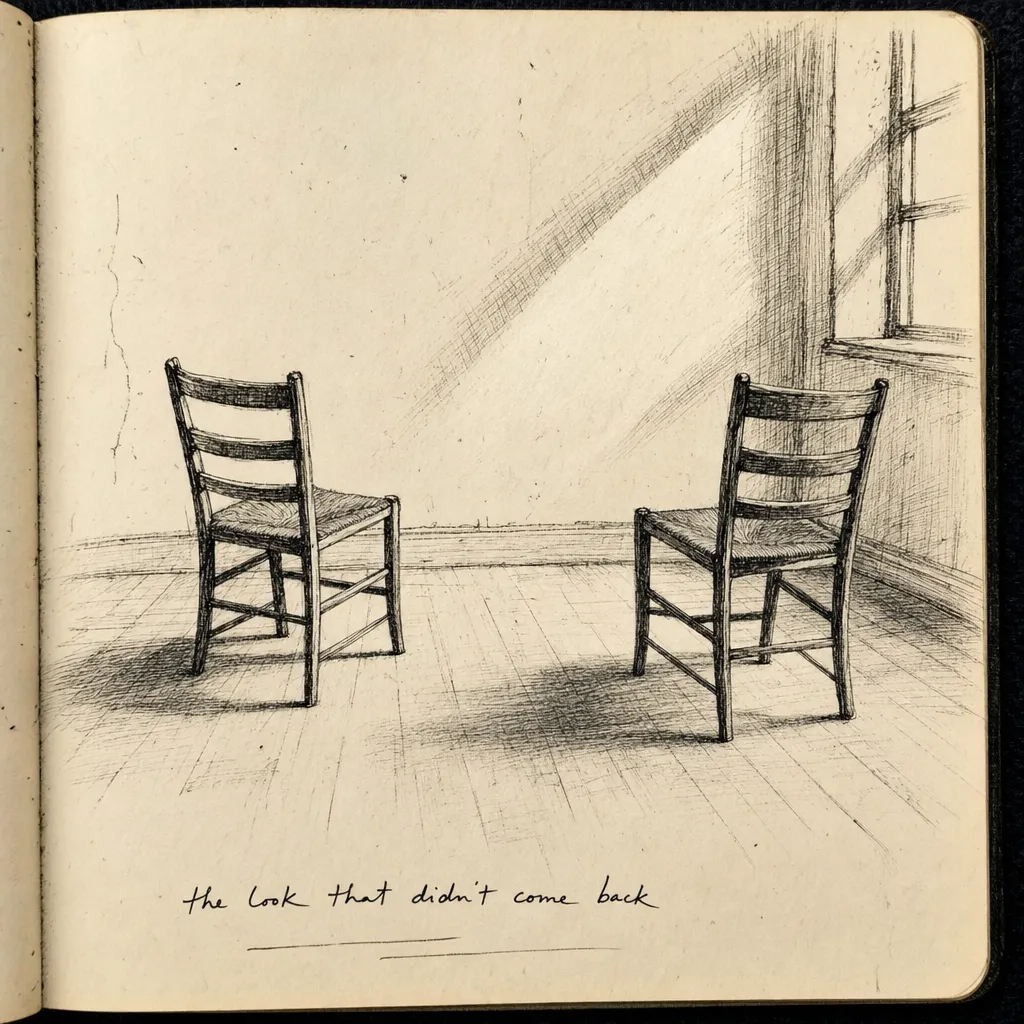
The most insidious of all, though, isn't carried by any phrase. It's shame without words: the gaze that turns away when the child says something, the silence that follows, the awkwardness on a parent's face. Nothing was said, so nothing can be discussed or contested. The message, however, arrived intact.
A cultural aside
A brief stop is worth making here, because shame isn't distributed evenly across cultures. Anthropologists have described a distinction between societies regulated mainly through guilt and societies regulated mainly through shame. In the first, the internal criterion dominates: I judge myself by my own principles. In the second, what counts is the gaze of the community.
Greek society, like most Mediterranean ones, leans historically towards the second. The phrase "what will people say" isn't one family's idiosyncrasy; it's a cultural distillate. And the small scale of communities, where everyone knows everyone, gives that gaze specific faces.
Shame doesn't become more pathological here; it does acquire more social legitimacy, and so it's recognised as a problem far less easily. Someone who organises their entire life around what others will think may never hear that this is worth examining, because everyone around them is doing exactly the same.
Wurmser: shame as a guard
Léon Wurmser, in what remains the fullest psychoanalytic treatment of the subject, proposed a view that changes how we see the symptom. Shame, he wrote, functions as a guard. It works as a guardian far more than as pain.
What it guards is our most vulnerable part: the thing we believe would make us outcasts if it showed. It might be a need we learnt to consider excessive, a desire deemed shameful, a weakness, an entire side of the personality. Shame stands in front of it and prevents exposure, at the cost of preventing contact too.
This view explains two things that otherwise look paradoxical. First, why people with chronic shame develop exceptional skills at concealment: they become pleasant, helpful, discreet, extremely good at not being a nuisance. Their social functioning can be high, and that's precisely why their difficulty stays invisible.
Second, why shame is unusually hard to treat. With every other emotion, speaking about it is the first step towards relief. With shame, speaking is the threat. We're asking someone to expose exactly what their entire psychological organisation was built to hide.
The disguises
Almost nobody arrives saying "I feel ashamed". They arrive with something else, and the shame reveals itself underneath.
Perfectionism is the commonest disguise. If I'm flawless, I'll never be exposed. The logic is watertight and its application exhausting, because it demands constant vigilance on every front at once.
Excessive apologising is another. People who apologise for speaking, for taking up space, for existing. The apology here isn't about an act; it's advance compensation for the inconvenience of being there.
The inability to accept a compliment belongs to the same family. Praise brings the gaze onto me, and the gaze is precisely the danger.
Anger is perhaps the most misunderstood of all. It's a classic clinical finding that shame often converts into rage, particularly in people for whom vulnerability was forbidden. The mechanism is simple: shame makes me small and helpless, anger makes me large and powerful. The conversion is instantaneous and unconscious, which is why certain people explode in situations others would let pass: something shamed them, and the anger arrived before they could feel the shame.
Finally there's withdrawal, which looks like indifference and is its opposite, and there's the chronic sense of emptiness. When someone has spent decades hiding the parts of themselves they judged unacceptable, what stays visible is a shrunken version, and life seems to happen at a distance. The article on chronic emptiness examines this experience in detail; shame is one of the commonest routes there.
What happens in the body
The neurobiology of shame has a peculiarity that separates it from fear, and explains why it's experienced so differently.
Fear activates the sympathetic nervous system: heart pounding, muscles preparing, energy for fight or flight. Shame does almost the opposite. Schore described an abrupt shift into parasympathetic dominance: heart rate drops, muscle tone falls, posture collapses. It's deactivation, not mobilisation.
That explains why shame paralyses. You can't fight or run from it, because the body hasn't entered action mode; it has entered disappearance mode. It also explains why logical objections ("you did nothing wrong") have so little effect: they address a system that isn't, at that moment, in any position to process them.
A caveat is owed here. Research on the neurobiology of self-conscious emotions is clearly less mature than the research on fear, and these descriptions are more schematic than one would like. What can be said safely is more modest: the bodily experience of shame differs qualitatively from that of anxiety, and any therapeutic approach treating them as the same thing misses something essential about shame.
What doesn't help
Because shame is so widespread, a fair amount of well-meant advice circulates about it that works in reverse, and it's worth naming.
The commonest is reassurance. But you've got no reason to feel ashamed. The intention is good, the result usually additional shame: now the person is ashamed of feeling ashamed for no reason. The emotion isn't cancelled by permission from third parties.
Second is the instruction to forget it, nobody remembers. It's probably true and entirely useless, because the problem isn't in other people's memory but in the internalised gaze that has already taken up residence.
Third, and most dangerous, is forced disclosure. The idea that if someone is made to speak publicly about what they hide, they'll be liberated. In practice, a disclosure made before there's enough safety, or one that meets the wrong response, entrenches the shame rather than resolving it. The person acquires one more piece of evidence that they were right to hide.
The therapeutic approach
As a psychotherapist, there's one observation about shame I hold as more important than any theoretical formulation: it's the only emotion that grows in silence and shrinks in witness.
Sadness can be processed alone. Anger too, up to a point. Shame cannot. Because it was born inside a gaze, it needs another gaze to change. Here lies the paradox of treating it: we're asking someone to do exactly what they fear most, with the only guarantee being that this time, perhaps, what they expect won't happen.
In practice this means the work moves slowly and that the person sets the pace. It also means I pay particular attention to one specific moment: the one immediately after a disclosure. The person has just said something they'd never said, and then they look. They wait for the gaze to turn away, as it did back then. Whatever happens in those seconds counts for more than anything I could interpret.
Psychodynamic psychotherapy offers something here that no technique replaces: the repeated experience of being visible without being rejected. Not once, because once gets explained away as politeness or professional obligation. Dozens of times, until the body starts believing what the mind already understood.
Gradually, the work turns to the history too: whose is the gaze this person fears, when did they meet it, what did they have to hide in order to avoid it. Many discover that what they were hiding was something entirely ordinary and not remotely unacceptable: a need, an anger, a wish to be noticed. That discovery is often the point where something loosens.
In plainer words
Guilt says "I did something bad" and has a solution: I make amends. Shame says "I am something bad" and has none, because nobody can make amends for existing. That's why guilt brings us closer to others and shame hides us.
A little shame is normal and useful: it helps us live alongside other people. It becomes a problem when it stops being a momentary signal and turns into a permanent answer to who we are. That usually happens in childhood, not because someone shamed us once, but because the reconnection after the shame never came.
It rarely shows up under its own name. It hides behind perfectionism, constant apologies, the inability to accept praise, even behind outbursts of anger. And it's the only emotion nobody processes alone: because it was born inside a gaze, it needs another gaze to change.
A closing thought
There's an experience described by almost everyone who has worked therapeutically with their shame, and it has a consistent shape. They say a thing they swore they'd never tell anyone. A silence follows, terrifying for a few seconds. Then nothing happens. Nobody turns away, nobody leaves, the world carries on.
That "nothing" is among the most therapeutic experiences there is, precisely because it differs so sharply from the expectation. Shame was built on a prediction: if this shows, they'll cast you out. The prediction isn't undone by argument; it's undone only by being disproved, and several times over.
Anyone who recognises themselves in these lines might hold onto this: the fact that you hide doesn't mean there's something worth hiding. It means that once, when you showed yourself, nobody received you. That's a different thing, and it can change.

Theoretical sources
For anyone who would like to read further, the main sources this piece draws on, alphabetically:
Gershen Kaufman, Shame: The Power of Caring (1980), on shame as a disruption of the interpersonal bridge and the significance of reconnection.
Helen Block Lewis, Shame and Guilt in Neurosis (1971), the study that established the distinction between the two emotions and the opposite behaviours they produce.
Allan Schore, on the neurobiology of shame in the second year of life and the role of reconnection after regulation.
Silvan Tomkins, on shame as a primary affect with a universal physical signature.
Léon Wurmser, The Mask of Shame (1981), the fullest psychoanalytic treatment of the subject and the concept of shame as guardian of the vulnerable.