
Adult ADHD: when a diagnosis brings both relief and grief
Adult ADHD: why a diagnosis later in life can bring relief, but also anger and grief for lost time. What research shows, the role shame plays, and what therapy can, and cannot, offer after a diagnosis.
The report says ADHD, and for many adults the first thought is a phrase from their school years, turned inside out: "So I wasn't lazy." For years teachers, parents, later managers and partners said the same thing in different words. Bright, but doesn't try. Capable, but away with the fairies. Now someone with professional standing is saying something else, and the first reaction feels like breathing again after a long time underwater.
The relief is real. For many people, though, alongside it or a little later, something arrives that nobody warned them about: a sadness that does not fit the good news, and an anger with no obvious target. Not everyone feels this, and there is no fixed order. When it does happen, it is confusing. Why would an explanation that finally makes the pieces fit bring grief?
A diagnosis of ADHD in adulthood can bring relief, and with it anger and grief. The relief comes because decades of difficulty finally have an explanation. The grief, when it comes, arises because that same explanation forces a person to reread their life: the time, the opportunities and the picture of themselves that were lost while the difficulty had no name.
What is adult ADHD, and what isn't it?
Few mental health conditions have become as popular on social media. When researchers in Canada examined the hundred most popular ADHD videos on TikTok, they found that about half were misleading. Most of those presented symptoms that turn up across many mental health difficulties, such as anxiety, anger, mood swings or relationship conflict, as specific signs of ADHD. None of the misleading videos suggested an assessment by a professional. The result is two opposite misunderstandings that feed each other: that "everyone's a bit ADHD", and that adult ADHD is a fad.
ADHD, attention deficit hyperactivity disorder, is a neurodevelopmental condition. Beginning in childhood, it often continues into adult life, bringing difficulties in regulating attention, organising, waiting, and frequently in regulating emotions too. A global meta-analysis from 2021 estimated that around 2.6% of adults have ADHD that began in childhood, rising to about 6.8% if you count everyone with symptoms, regardless of when they started. ADHD is not simply explained by upbringing, and the idea of "bad parents", which many adults with ADHD still hear, is unfair to parents and children alike. The link with trauma is more complicated: in a review of prospective studies, childhood maltreatment and ADHD were consistently associated, but the evidence on which causes which was conflicting. Traumatic experiences can coexist with ADHD, make the picture heavier or produce symptoms that resemble it, and the question of cause remains open.
Neuroscience needs a careful reading here. The largest imaging study of its kind, with more than 3,000 participants from 23 sites, found smaller volumes in some deep brain structures, including the amygdala, which is involved in emotional regulation. But the differences were around one per cent, appeared as averages across large groups, and in adults they were not statistically significant. No brain scan, then, can tell whether a particular person has ADHD. Diagnosis is made by a specialist, usually a psychiatrist, through a clinical interview and a history going back to childhood, never by an online test.
A life under the wrong name
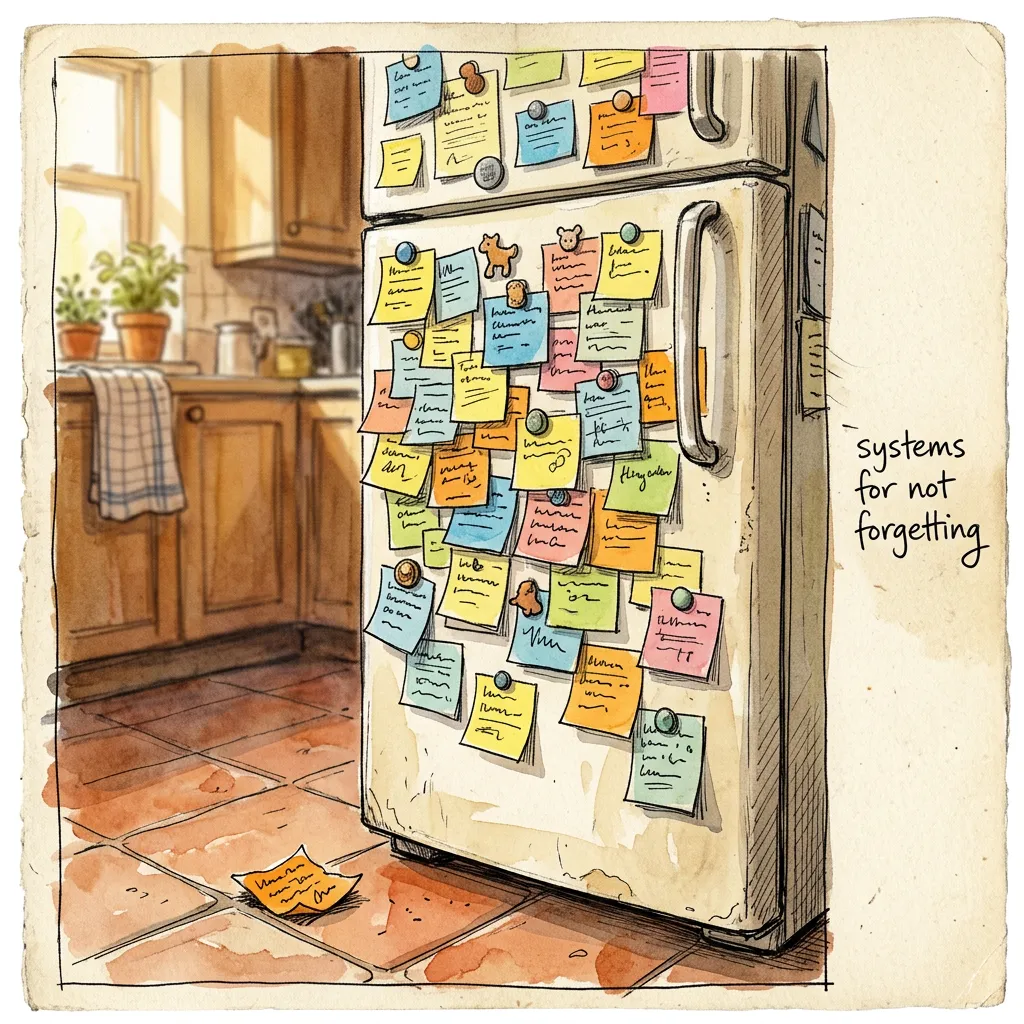
Primary school reports often carry the same remark in the margin, in different versions: could do more. The adult diagnosed at forty usually remembers exactly how it was worded. They also remember the strategies they built so it would not show: lists on every surface, the all-nighter before every deadline, always arriving ten minutes early because otherwise they would be half an hour late. This compensation is one reason ADHD stays hidden for decades. Women in particular, whose presentation often looks nothing like the traditional picture of the hyperactive boy, tend to be diagnosed later, after years of "masking".
Something weighs more than the lost time, though. When a neurodevelopmental difference has no name, the child, and later the adult, gives it the only name available, and that name is almost always moral: laziness, carelessness, lack of character. A difficulty with functioning turns into a verdict on worth. This is the move from "I did something wrong" to "I am wrong" described in our article on shame. A German study of 104 adults with ADHD found that almost one in four reported high internalised stigma and almost nine in ten expected to face discrimination in everyday life. The stereotype they had met most often was doubt that ADHD even exists.
Here I owe some honesty on behalf of my own profession. Many adults eventually diagnosed with ADHD had already been in contact with mental health services, where their difficulties were put down to anxiety, depression or personality problems. Often the anxiety and depression were genuinely there. But nobody asked what their attention had been like at ten.
Why would a diagnosis that explains so much bring sadness?
A team of researchers in Dublin brought together 21 qualitative studies involving 397 adults diagnosed with ADHD in adulthood. For many, the diagnosis worked as a landmark event for identity. The diagnosis opened a reckoning with their whole life story, which could bring more kindness towards themselves, but also grief, anger and confusion about who they are. In Edinburgh, another team analysed 225 public social media posts from people who learned late in life that they are neurodivergent, mostly autistic, ADHD or both. The researchers described a cycle of grief, relief and belief in oneself, with four recurring themes: the life I could have had, grieving for my younger self, gratitude, and an exhaustion that follows diagnosis. That study analysed posts already talking about grief, and included people who had identified themselves; it shows how this grief can be lived, not how often it occurs.
Grieving for the younger self may be the tenderest and the hardest of these. The adult looks back at the child who was embarrassed at the blackboard, the student who dropped out, the young woman who believed she could never finish anything, and understands that these people were carrying a weight nobody saw. Where anger exists, it often points backwards: at the school, the family, the professionals who did not ask. And sometimes it points nowhere at all, because there is no one in particular to blame.
Kenneth Doka, who has studied grief for decades, coined the term disenfranchised grief for losses that others do not recognise as losses, and which are therefore given no room. Grief after a late diagnosis belongs exactly there. People around say "at least you know now" or "we're all a bit scatty", with good intentions, and the person is left with a grief that seems to have no right to exist.
Freud, in "Mourning and Melancholia", drew a distinction that helps show what is at stake. In mourning, the world feels poorer because something has been lost. In melancholia, the loss turns against the self. After a diagnosis, both paths are open. One says, "I lost years, and it hurts." The other says, "I wasted my life", and repeats, in new words, the old accusation of laziness.
The grief has a more mundane source too. Across the studies in the review, adults describe the road to diagnosis as full of obstacles and delays, and the support afterwards as patchy or absent. Some receive a label and a prescription and are left alone with everything else. The Edinburgh researchers argue that diagnosis should be treated as a first step rather than a final one, and the exhaustion many describe after diagnosis is probably not unrelated to this abandonment: the door opens, and the room behind it is empty.
Rewriting an identity
Erik Erikson described identity as a sense of continuity: that I am the same person today as yesterday, and that others see me roughly as I see myself. A diagnosis at thirty or fifty interrupts that continuity. Suddenly a large part of the story a person has been telling about themselves turns out to be wrong, or at least incomplete.
The Dublin review describes a phase of confusion many will recognise: where do I end and where does the ADHD begin? Was the impulsiveness my friends loved character or symptom? The ease with new things, the ability to work with astonishing intensity when something grips me, do they belong to me or to the diagnosis? There is no clean line. ADHD is not a foreign body inside the personality; it has taken part in shaping it.
Two risks open up here, facing each other. The first is the label that swallows everything: every difficulty, every argument, every bad day becomes "my ADHD", and the person again loses the sense of being the author of their own life. The second is denial, a return to the old story because the new one hurts more than expected. Between them lies slower work: rereading one's successes. Many adults with ADHD credited whatever they achieved to luck or to last-night overexertion, much as happens in imposter syndrome. After diagnosis, they begin to see that they managed it while carrying an extra weight they did not know they had.
Identity is not only rewritten inside a person, though. It is rewritten in their relationships. The partner who for years read the forgotten appointments as indifference now has another explanation, and this can bring understanding, but also a difficulty of their own, because the anger they felt for so long does not vanish with an explanation. The review also records a recurring dilemma: who to tell. At work, in the family, among friends, disclosure can bring more understanding or open the door to the very stigma the person hoped to leave behind. There is no right answer for everyone. There is only the question, which is worth not rushing to close.
Overdiagnosis, or recognition at last?
Adult ADHD diagnoses have risen sharply over the past decade, especially among women. The rise can be read in two ways. A 2025 Danish review notes that adult diagnoses exceed what long-term studies would predict, and calls for stricter criteria, particularly at a time of rising performance demands. Other researchers respond that adult ADHD was underdiagnosed for decades, and that the rise looks more like the correction of an old omission.
Quite plausibly, both are happening, in different groups and services, and the rise in diagnoses does not by itself show how many are wrong. Some people are finally diagnosed after a lifetime of being misunderstood. But there are also conditions that look like ADHD without being it: the burnout that blurs concentration, the chronic anxiety that makes thoughts jump from one thing to the next, the aftermath of trauma, sleep deprivation. The crucial difference is that ADHD has been there since childhood, even if for years it was compensated for and only showed when demands outgrew the strategies. That is why a proper assessment asks for a full developmental history and considers other possible explanations. A concentration problem that appeared at thirty-five, alongside a job that swallows everything, calls for a careful question: did it start then, or did it only become visible then?
Greek data are still scarce. A recent study from Patras, of 254 adults who had not been diagnosed as children, found that older participants reported more intense symptoms. The data came from a self-report questionnaire, not diagnoses, and the finding allows many interpretations. It does suggest that the question also concerns people who did not grow up with the word ADHD in their vocabulary. The exact line between overdiagnosis and recognition remains open, and will probably stay that way for some time.
What therapy can offer after diagnosis
Let us start with the limits. ADHD in adults is treated through psychiatric assessment, adjustments to the environment and, where appropriate, medication. The UK clinical guidelines (NICE) also recommend, when non-drug treatment is needed, a structured psychological intervention focused on ADHD, which may include cognitive behavioural therapy adapted for ADHD. CBT is the psychotherapy with the strongest research on the symptoms themselves: a Cochrane review of fourteen randomised trials found that it improves them, although the evidence still needs strengthening. Psychodynamic psychotherapy has no comparable evidence for ADHD symptoms, and it replaces none of the above.
What it can offer, as a complement, is work on everything that built up around ADHD while it had no name: the shame, the grief, the story a person tells about themselves, their relationships. That is a therapeutic focus, not a treatment for ADHD itself, and it is worth saying so plainly.
The psychoanalyst Karen Gilmore observed back in 2000 that psychoanalysts tended to treat ADHD either with scepticism or as a reason not to take someone on. In her theoretical paper, which deals mainly with children, she argued that psychoanalytic work has a place, usually alongside medication. This is not a clinical trial; it is an invitation to hold neurobiology and meaning together, without sacrificing one for the other.
As a psychotherapist, after a diagnosis like this, the first thing I listen for is the language a person uses about their past. Words like "lazy", "useless", "I ruined everything" often come back, even after the diagnosis. Therapy makes room for the grief others did not recognise, for the anger that has nowhere to go, and for the shame that needs time to loosen because it was built over years. Therapy also works with what the diagnosis unsettles around a person: parents who may feel guilty, a partner rereading their own years, the decision about who to tell.
Psychodynamic psychotherapy does not promise to erase ADHD, nor should it. Often it is combined with the approaches above: structured work helps with daily life, while a therapeutic space helps write a life story in which the hard years are no longer proof of a flawed character. And for anyone reading this and wondering about themselves: if difficulties with attention were there from your school years, however well hidden, and weigh on more than one area of your life, an assessment by a psychiatrist experienced in adult ADHD is worth considering. An online test can be the prompt, never the answer.
In plain words
When ADHD is diagnosed in adulthood, people often feel relief, because years of difficulty finally have an explanation. Alongside it, or later, sadness and anger may come, for what they went through without knowing, and for the self they blamed unfairly. This grief is normal, even if those around them do not understand it. ADHD is a neurodevelopmental condition and is diagnosed by a specialist. Treatment involves psychiatric care and structured psychological work, and therapy can additionally help a person reread their life without the old, unfair verdict.
Meeting your younger self
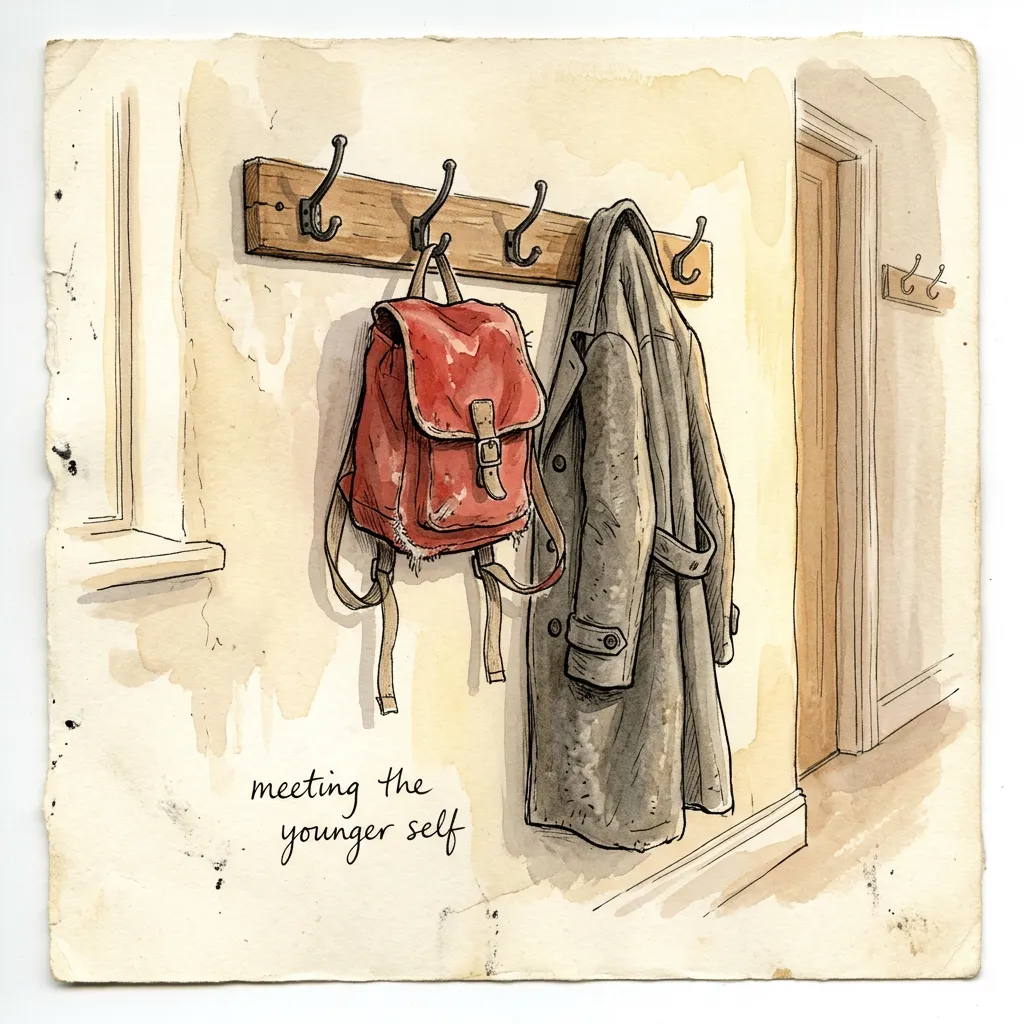
After a late diagnosis, many adults pick up old photographs or school exercise books and look at the child they were with different eyes. The child is the same; what has changed is the interpretation that came with them for so many years.
The time that passed does not come back, and it is legitimate to grieve it. But it was not entirely lost. Within it grew resilience, inventiveness, a way of surviving in a world that was not built for you. A diagnosis does not change the past. It allows you, perhaps for the first time, to look at it without shame.
Theoretical sources
For readers who want to go further, these are the main sources this article draws on, in alphabetical order:
Kenneth J. Doka (ed.), Disenfranchised Grief: Recognizing Hidden Sorrow (1989), book with no free version. The work that gave a name to the grief society does not recognise.
Karen Gilmore, A psychoanalytic perspective on attention-deficit/hyperactivity disorder (2000), abstract on PubMed. A theoretical psychoanalytic view, mainly concerned with children, that takes the neurobiology of ADHD seriously.
Martine Hoogman and colleagues, Subcortical brain volume differences in participants with attention deficit hyperactivity disorder in children and adults (2017), free full text. The large imaging study, and the limits of what it can say about the adult brain.
A. P. A. Mair and colleagues, Grief, Relief, and Belief: A Social Media Study on Late Identification of Neurodivergence (2026), free full text. The cycle of grief, relief and belief after a late diagnosis.
Theresa V. Masuch and colleagues, Internalized stigma, anticipated discrimination and perceived public stigma in adults with ADHD (2019), abstract on PubMed. The stigma adults with ADHD carry, and how they turn it against themselves.
L. McGill, I. Jardim-Lalor and C. O'Connor, A Systematic Review of Lived Experiences of Receiving a Diagnosis of ADHD in Adulthood (2026), free full text. What adults go through when they learn they have ADHD, according to 21 studies.
A. Politi and colleagues, Hidden in Adulthood: What is the Prevalence of ADHD among adults in Greece? (2026), free conference abstract. Among the first Greek data on ADHD in adults without a childhood diagnosis.